
Heritage site
Ville Close de Concarneau
Concarneau · Finistère
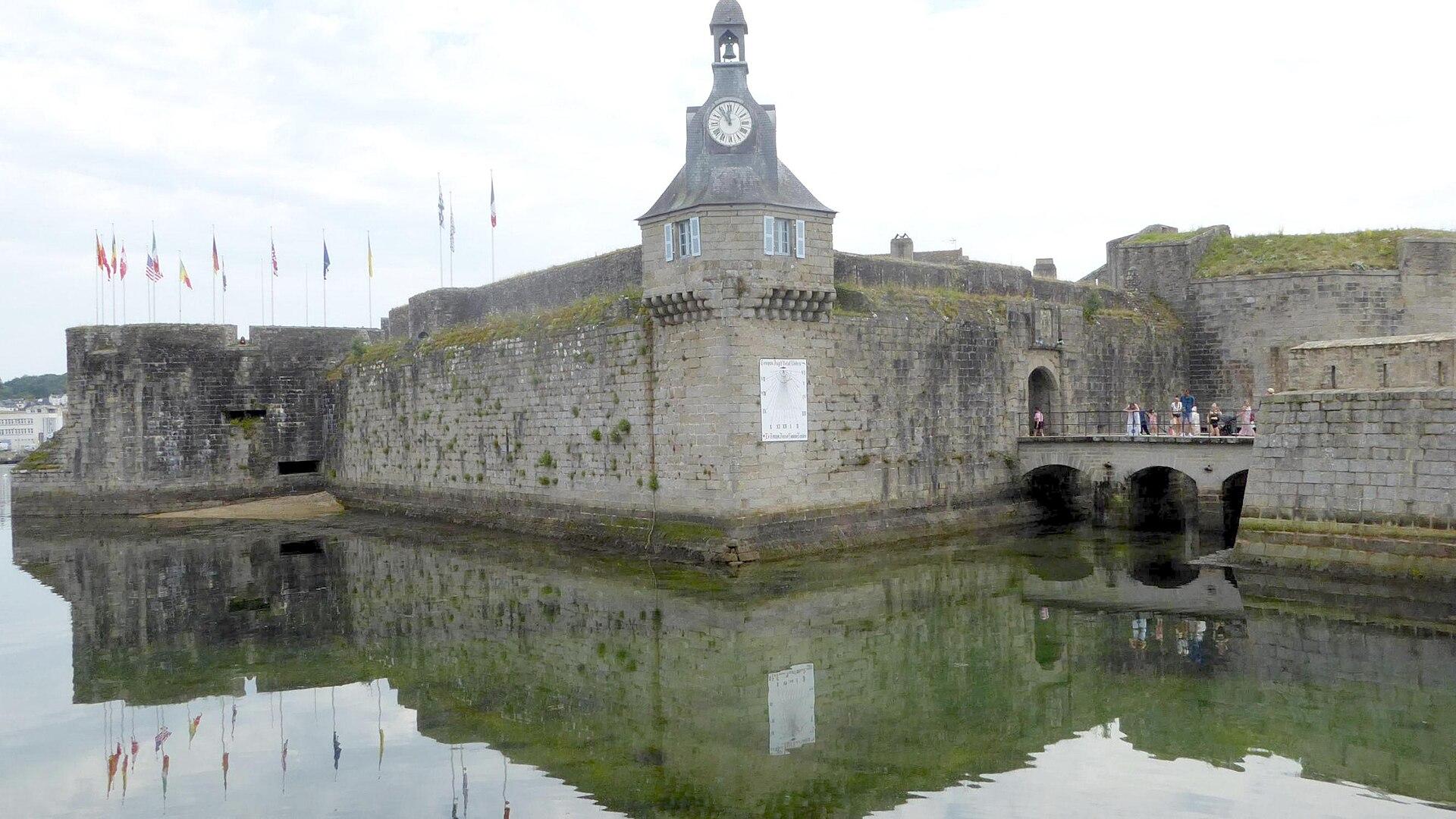
A fortified islet set in the middle of Concarneau’s harbours, ringed by granite ramparts, pedestrian and still lived in.
- Suggested time
- An hour and a half to two hours
- Type of place
- Fortified town on an islet
- Atmosphere
- Medieval, maritime and full of shops
- Getting there
- Pedestrian access by the bridge from the quays. A mostly pedestrian site; park outside.
Who this place suits
- With family
- 9/10
- As a couple
- 9/10
- With friends
- 8/10
- Solo
- 9/10
- With a dog
- 7/10
- Reduced mobility
- 4/10
These scores are calculated from what the page records: official rating, facilities, difficulty, duration and location. They are a guide, not a substitute for contacting the venue, especially about accessibility.
About
The Ville Close is a simple and striking idea: a small town entirely ringed by granite ramparts, set on an islet in the middle of Concarneau’s harbours, reached by a bridge from the quays. Three hundred metres long, narrow lanes, nine towers, three gates, and water all around. It is the cradle of the town, its historic heart, and by far the most recognisable image of south Finistère. You can walk all the way round in an hour and a half without rushing, and what stays with you most is the contrast: inside, a stony medieval town; from the ramparts, the trawlers, masts and harbour basins. The place is much older than its present walls. A monastery dependent on the abbey of Landévennec was established on the site as early as the 7th century, and the stronghold is recorded from the late 11th century. The first fortifications were wooden, then gradually built in stone. But the silhouette you see today comes from two much later campaigns: in the 15th century the fortifications were completely rebuilt to withstand artillery, and in the 17th a ravelin and a half-moon were added, with towers modified under Vauban to take gun platforms. The whole has stayed very close to its 17th-century state, making it an almost intact lesson in how a Breton coastal fortification evolved. The ramparts have been listed as a historic monument since 1899, with further protection in 1913, and Concarneau has been a Ville d’art et d’histoire since 2002. What keeps the Ville Close from being a mere stage set is that people live there. About a hundred residents live there all year, behind the stalls, restaurants and shops of the main street. That changes how you walk around, especially in August: these are streets, not a theme park. It also explains the place’s two faces. In high season, the street is crowded and very commercial. Early in the morning, late in the day or out of season, the town becomes what it really is, a silent stronghold on the water, and that is by far the best time to see it. The main thing is to look up and walk the ramparts. The wall walk gives the finest views of Concarneau, over the fishing harbour on one side and the marina on the other. In the lanes, look for granite-gabled houses, a few half-timbered facades, carved lintels and former chapels put to new uses. The Maison du patrimoine, inside the walls, offers free exhibitions from April to October, and a guided tour, Les clés de la Ville-Close, tells the maritime, civil and military story of the site in an hour and a half. To go further, the Petit Bac ferry crosses to Le Passage, the old fishermen’s quarter opposite: the shortest and prettiest way to understand that Concarneau is first and foremost a port. Two things to know before you go. The Musée de la Pêche, the Ville Close’s major cultural venue, has been closed since 3 November 2025 for works lasting until 2027, with reopening planned for February 2027: do not count on a museum visit, trawler included, until it has reopened. And the ramparts themselves are not accessible to wheelchair users, as the heritage department makes clear. The rest of the town is free, open and superb all year round.
What you will see
- An islet entirely fortified in the middle of two harbours, linked by a simple bridge
- Granite ramparts 2.5 to 3 metres thick, listed since 1899
- Nine towers and three gates, in walls that have stayed close to their 17th-century state
- A ravelin and a half-moon, evidence of the adaptation to artillery
- The wall walk, with the finest views over the fishing harbour and the marina
- Narrow lanes, granite-gabled houses and a few half-timbered facades
Show 4 more pointsHide
- A place still lived in, with about a hundred year-round residents
- The Maison du patrimoine and its free exhibitions from April to October
- The Petit Bac ferry to Le Passage, the old fishermen’s quarter opposite
- Part of a Ville d’art et d’histoire since 2002, visited in an hour and a half
Practical information
- Address
- Ville Close, 29900 Concarneau
- Public transport
- Buses from Rosporden station, about 20 minutes, and from Quimper station, about 40 minutes. The Ville Close is then a walk from the quays, about 200 metres from the tourist office. A little tourist train runs from April to September from the entrance to the Ville Close
- Parking
- Park outside, on the harbour or the quays, and walk into the town: the Ville Close is not open to traffic. According to the tourist office, parking is free from September to June, with variable summer charges
- Pets
- The outdoor walk is very easy with a dog on a lead. On guided tours, animals are allowed but not in enclosed spaces
- Accessibility
- The fortifications are not accessible to wheelchair users, as the heritage department makes clear, and they are excluded from adapted guided tours. The heart of the town is partly accessible depending on the area, with cobbles, changes of level and narrow lanes. For an adapted visit, call the heritage department in advance. With a pushchair, the main streets are fine, but not the ramparts
- Best time
- Early in the morning, late in the day, or out of season. Autumn and winter bring a calmer, more historic town with beautiful light. July and August are very busy
Tips on the spot
- Come early in the morning, late in the day or out of season: in August, the main street is crowded after 11 am.
- Allow an hour and a half to two hours for the full tour with the ramparts and lanes.
- The Musée de la Pêche is closed for works until 2027: do not plan your visit around it.
- The full tour of the ramparts is possible from April to the end of October; out of season, access is partial and the hours shorter.
- Climb the ramparts as soon as you enter: you instantly understand the islet, the two harbours and the town around them.
Show 4 more tipsHide
- Stop at the Maison du patrimoine, free from April to October, to understand what you are looking at.
- Take the Petit Bac to Le Passage: a short crossing with the best overall view of the walled town.
- Leave the main street as soon as you can: the side lanes are older and quieter.
- This is a lived-in neighbourhood, not a stage set: be discreet, especially in the evening.
Frequently asked questions
Why is it called the Ville Close?
Because it is the old town enclosed within its ramparts, the cradle of Concarneau.
How old is it?
It is recorded from the late 11th century, and a monastery dependent on the abbey of Landévennec already occupied the site in the 7th century.
Are the ramparts medieval?
Partly. The first fortifications were wooden, then stone, but today’s silhouette comes from the complete rebuild of the 15th century and the 17th-century additions, the ravelin and half-moon, with towers modified under Vauban for artillery.
Since when have they been protected?
The ramparts have been listed as a historic monument since 1899, with further protection in 1913. Concarneau has been a Ville d’art et d’histoire since 2002.
How thick are the ramparts?
2.5 to 3 metres, in granite.
How many towers and gates are there?
Nine towers and three gates. They give the Ville Close its distinctive silhouette.
See also all the heritage in Brittany.
Stay in Concarneau
Places to stay that are still available, with current prices, compared across the main booking platforms.
Partner link: a booking made from this map may earn us a commission, at no extra cost to you.
Read in the journal
- City guideWhat to do in Concarneau: the complete guideThe walled town on its islet, the fishing port, the Marinarium, the Sables Blancs beach, Pont-Aven and the Glénan islands: what to do in Concarneau and the surrounding area.
- ChristmasWhat to do in Finistère during the Christmas holidaysChristmas at Trévarez, the Quimper Christmas village, Locronan lit up, Océanopolis and wild headlands: our ideas for the 2026 Christmas holidays in Finistère.
- SeasonWhat to do in Finistère during the All Saints’ holidaysThe Pointe du Raz, Océanopolis, the Huelgoat forest, spring tides and the legends of the Monts d’Arrée: our ideas for All Saints’ 2026 in Finistère.
Traveller reviews
Nobody has reviewed this place yet.
Photograph: François Malo-Renault · CC BY 4.0 · Wikimedia Commons