Lighthouse
Rosédo Lighthouse
Île-de-Bréhat · Côtes-d’Armor
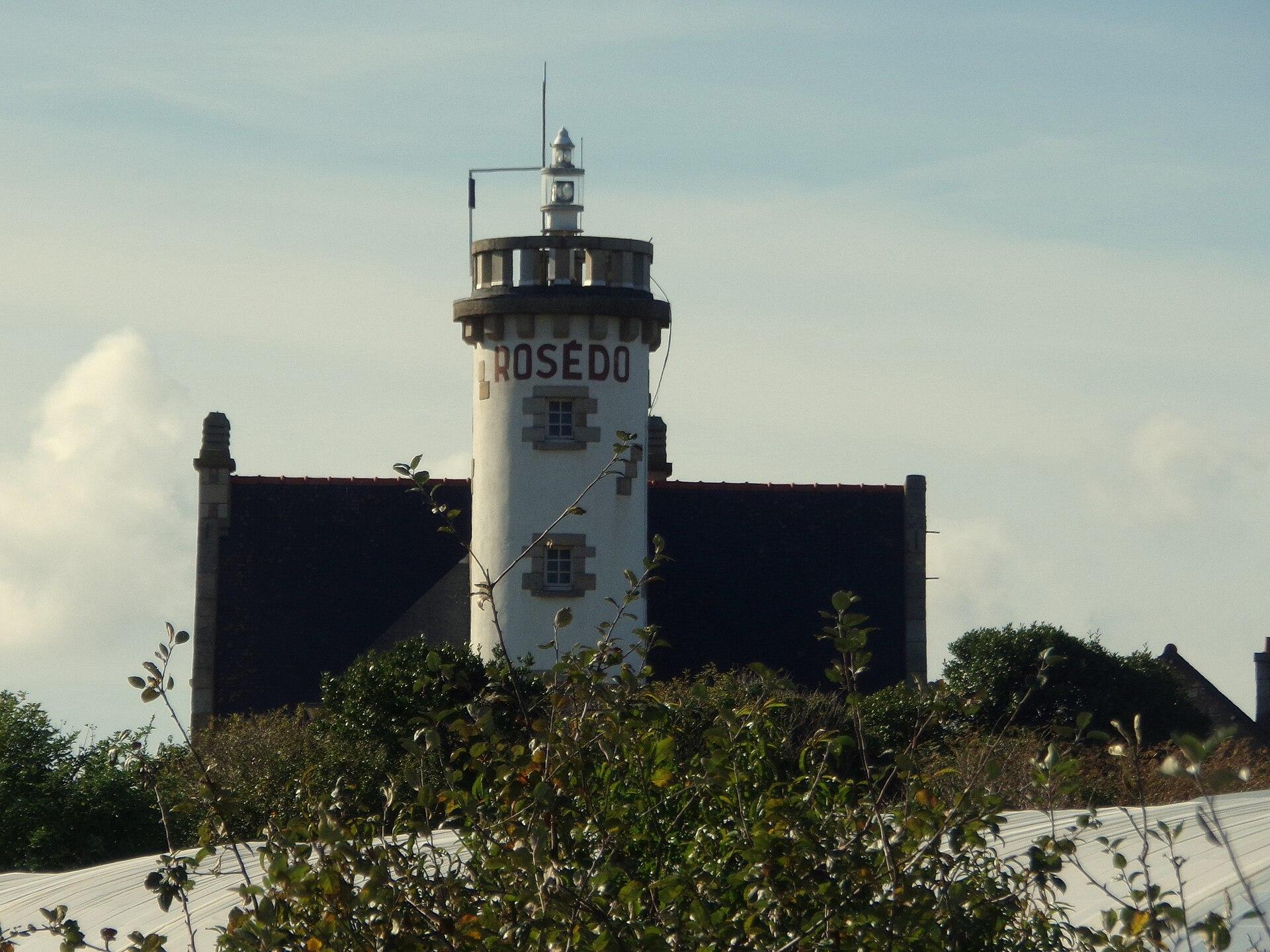
In the north-west of Bréhat, a 13-metre white tower rebuilt after 1944, with a white flash every five seconds and a range of 20 miles.
- Suggested time
- 20 to 40 min on site, usually part of a loop to the Paon lighthouse
- Type of place
- Active coastal lighthouse, not open to visitors
- Atmosphere
- Island, peaceful, historic and maritime
- Getting there
- North-west of the Île de Bréhat, at Rosédo. On foot or by bike from the landing stage. The lighthouse is closed to visitors.
Who this place suits
- With family
- 7/10
- As a couple
- 8/10
- With friends
- 8/10
- Solo
- 9/10
- With a dog
- 7/10
- Reduced mobility
- 5/10
These scores are calculated from what the page records: official rating, facilities, difficulty, duration and location. They are a guide, not a substitute for contacting the venue, especially about accessibility.
About
The Rosédo lighthouse is in the north of the Île de Bréhat, slightly west of the main route to the Paon lighthouse. The first lighthouse was built between 1858 and 1860 as a square tower attached to a keeper’s house. Its fixed red light was lit on 1 August 1860. The system then evolved: mineral oil from 1875, then a white flash every five seconds in 1897. The lighthouse was electrified in 1942, but destroyed on 4 August 1944 by German troops, the same day as the Paon lighthouse. The new building was put up between 1947 and 1949: a 13-metre tower, rectangular with one rounded face, attached to a stone house. The word “ROSEDO” is painted in large letters on the white body. The current light gives a white flash every five seconds, with an official range of 20 miles. In 2001, the traditional lantern was removed and replaced by an externally maintained light with a four-panel rotating optic. The lighthouse is automated and has had no keeper since February 2007. It is closed to visitors. Its interest lies mainly in the history of Bréhat’s signalling network and its position on the paths to the north of the island.
What you will see
- Type of site: active coastal lighthouse, not open to visitors.
- Height: 13 m.
- Light: a white flash every 5 seconds.
- Range: 20 miles.
- Optic: rotating, four panels, 0.15 m focal length.
- 1858 to 1860: first lighthouse built; fixed red light lit on 1 August 1860.
Show 6 more pointsHide
- 1875: switch to mineral oil; 1 March 1897: white flash every five seconds.
- 1942: electrification; 4 August 1944: destroyed by German troops.
- 1947 to 1949: current lighthouse built; back in service in 1949.
- 2001: the lantern is replaced by an externally maintained light.
- February 2007: end of keepers.
- With children: easy to include in a family walk, especially on the way to the Paon.
Practical information
- Pets
- Check the seasonal rules and Bréhat’s natural areas
- Accessibility
- Depends on how you get around and on the island’s paths; the lighthouse cannot be visited
- Safety
- No major difficulty around the building, but Bréhat’s paths can be uneven; take care near the coast and respect private property
- Best time
- Morning or late afternoon, in clear weather.
- Photography
- A frontal shot shows the ROSEDO lettering; for a more Breton image, include the paths, plants and rocks of the island
- Nearby
- The Paon lighthouse, the Bréhat signal station, the chapel of Saint-Michel, the Birlot mill, Port-Clos, the Bréhat citadel
Tips on the spot
- Check the visit status on the day before you travel, and do not confuse access to the site, the foot of the lighthouse and the inside of the tower.
- For a lighthouse open to visitors, check the time of the last climb, not just the closing time.
- For a lighthouse at sea, only watch it from a boat run by a professional or from a safe viewpoint on land.
- Bring a windproof layer, even in summer; stairs and galleries can be slippery with rain or spray.
- With children, check the number of steps and any minimum age; with vertigo, the climb to the gallery is not for everyone.
Show 7 more tipsHide
- Working lighthouses are maritime safety equipment: respect all restricted technical areas.
- For photos, use a wide angle at the foot of the lighthouse and a telephoto lens for lighthouses seen from a distance.
- On an island, check the last boat back before starting the visit.
- On cliffs, stay behind the barriers and on the paths; keep dogs on a lead in nature reserves.
- Visits can be cancelled at the last minute for safety reasons.
- Combine it with the Paon lighthouse on a loop of the north of the island.
- Hire a bike at Port-Clos to cover more ground.
Frequently asked questions
Can I visit the lighthouse?
No. It is in the north-west of Bréhat, at Rosédo, reached on foot or by bike from the landing stage; it is closed to visitors.
How much time should I allow?
20 to 40 minutes on site, usually as part of a loop to the Paon lighthouse.
What is its main interest?
A discreet but technically powerful lighthouse, a natural stop on the way to the wild north of Bréhat.
Is it free?
Yes, viewing from public spaces is free.
Is it suitable for children?
Yes, it fits easily into a family walk, especially on the way to the Paon.
Can I see the light at night?
Yes, the light is active and can be seen from safe public spaces.
Stay in Île-de-Bréhat
Places to stay that are still available, with current prices, compared across the main booking platforms.
Partner link: a booking made from this map may earn us a commission, at no extra cost to you.
Read in the journal
- ChristmasWhat to do in Côtes-d’Armor during the Christmas holidaysDinan in winter, scallops, the birds of the bay and Cap Fréhel in the wind: our ideas for the 2026 Christmas holidays in Côtes-d’Armor.
- SeasonWhat to do in Côtes-d’Armor at All Saints’Pink granite, Cap Fréhel, Bréhat, the scallop season and castles: our ideas for the 2026 All Saints’ holidays in Côtes-d’Armor.
- RankingThe most beautiful beaches in Côtes-d’ArmorSaint-Guirec and Trestraou in Perros-Guirec, Coz-Pors, the Plage Bonaparte, Val-André and Cap d’Erquy: our selection of the most beautiful beaches in Côtes-d’Armor.
Traveller reviews
Nobody has reviewed this place yet.
Photograph: Raphodon · CC BY-SA 4.0 · Wikimedia Commons