
Heritage site
Valley of the Saints
Carnoët · Côtes-d’Armor
More than 200 monumental statues in Breton granite on a hill in Central Brittany, in a contemporary project that aims for a thousand.
- Suggested time
- Two hours
- Type of place
- Park of monumental granite sculptures
- Atmosphere
- Monumental, windswept and strangely silent
- Getting there
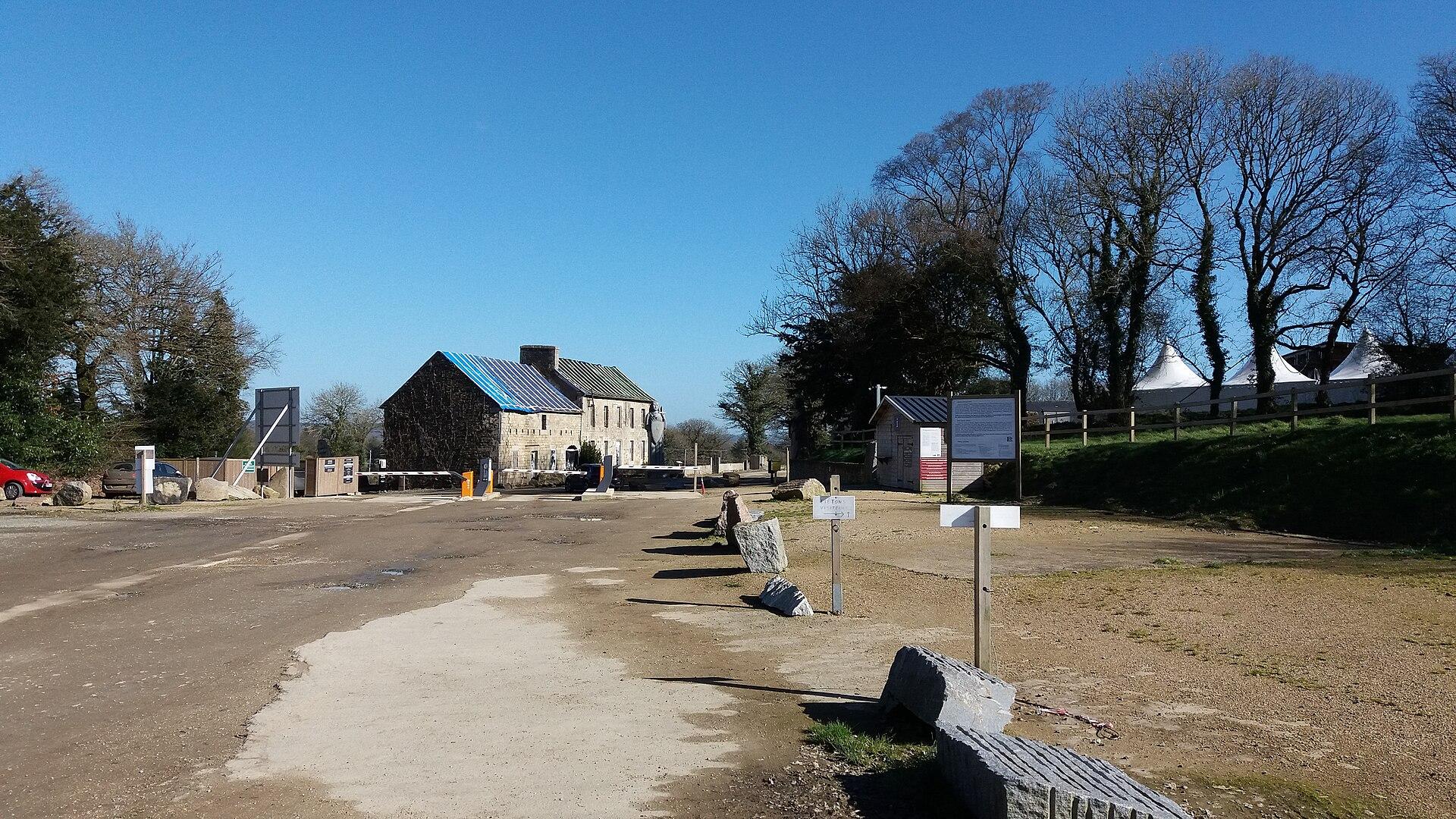
- Quénéquillec, Carnoët. Free access to the site; paid car park about 250 m away along a dirt track
Who this place suits
- With family
- 10/10
- As a couple
- 9/10
- With friends
- 9/10
- Solo
- 9/10
- With a dog
- 9/10
- Reduced mobility
- 6/10
These scores are calculated from what the page records: official rating, facilities, difficulty, duration and location. They are a guide, not a substitute for contacting the venue, especially about accessibility.
About
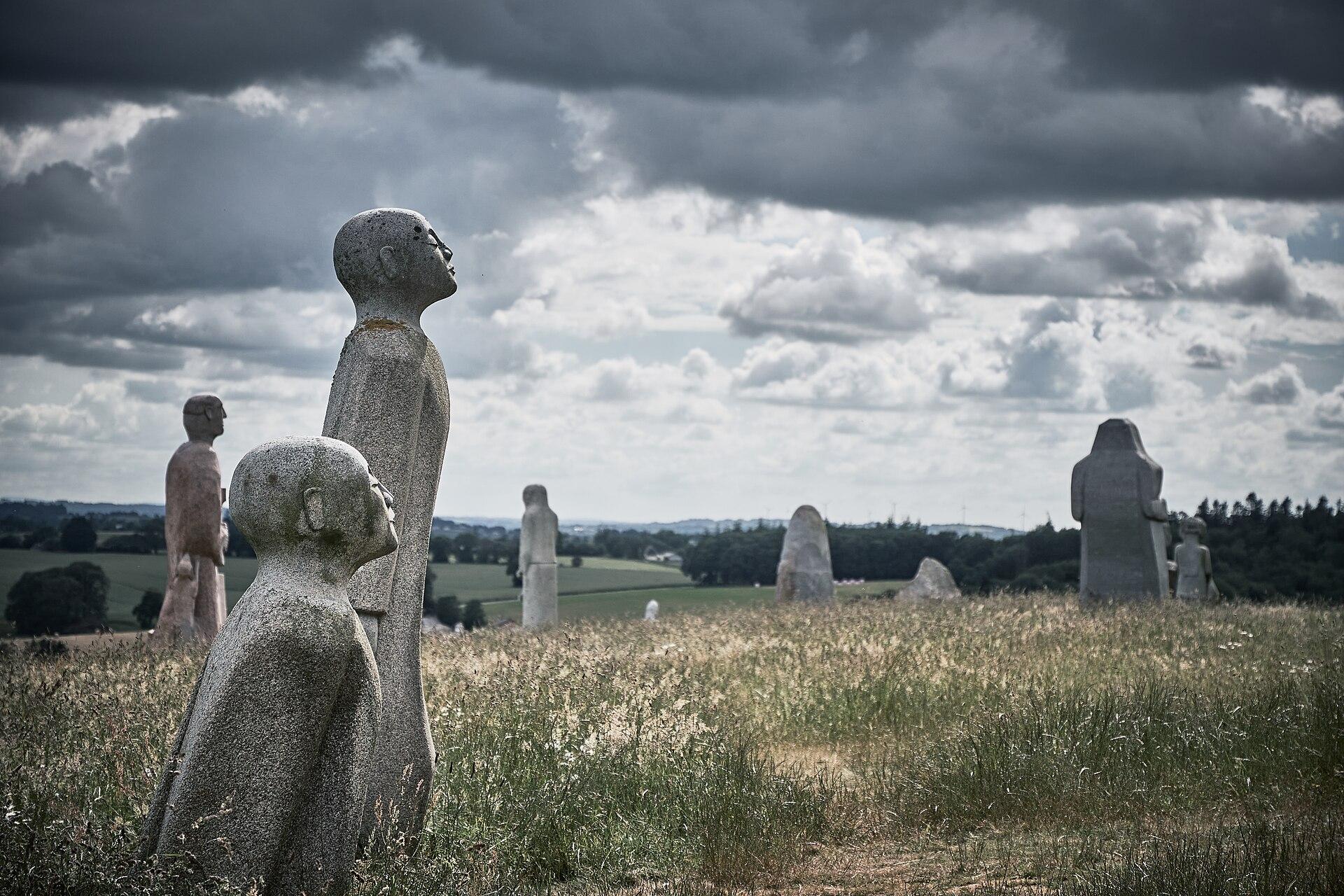
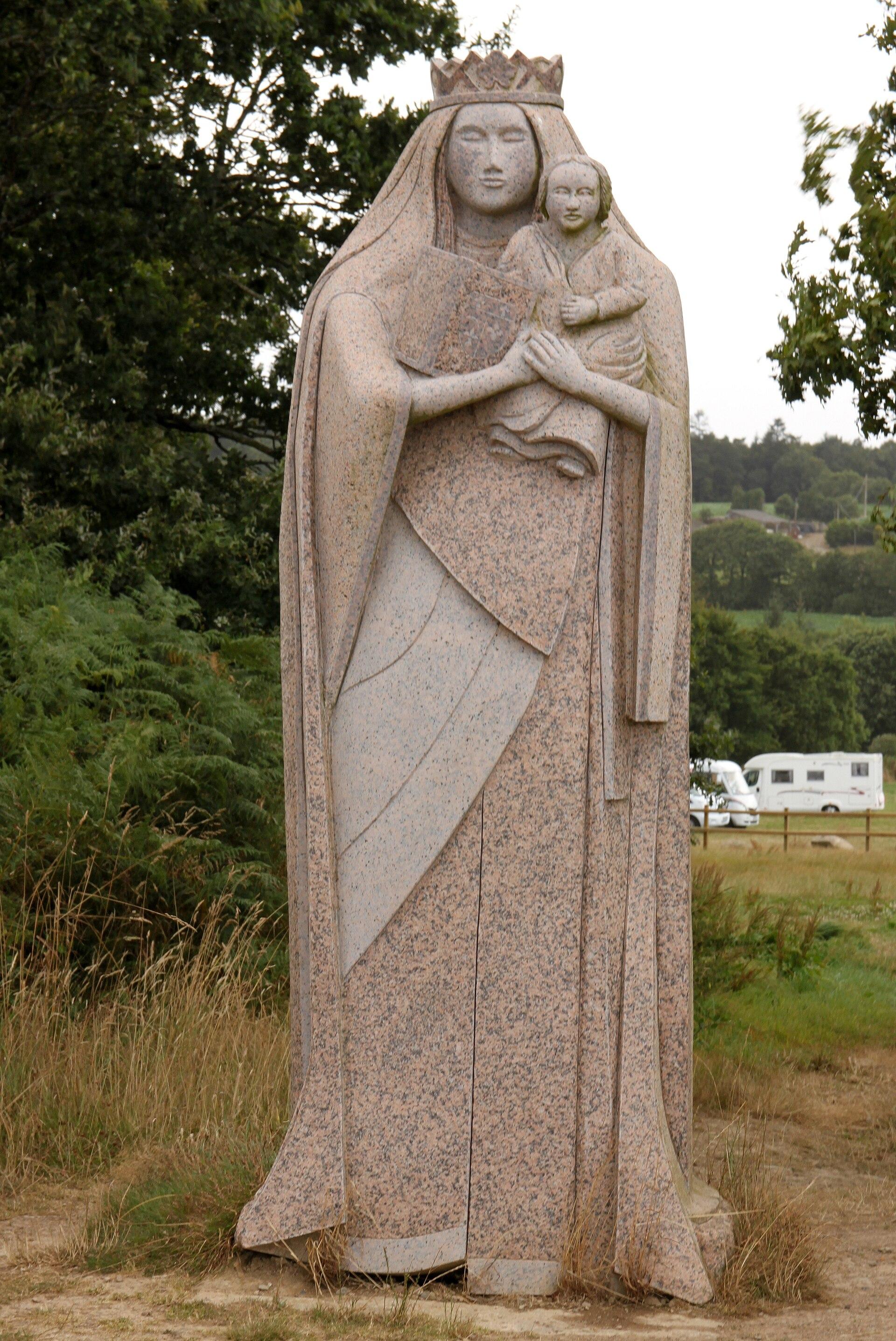
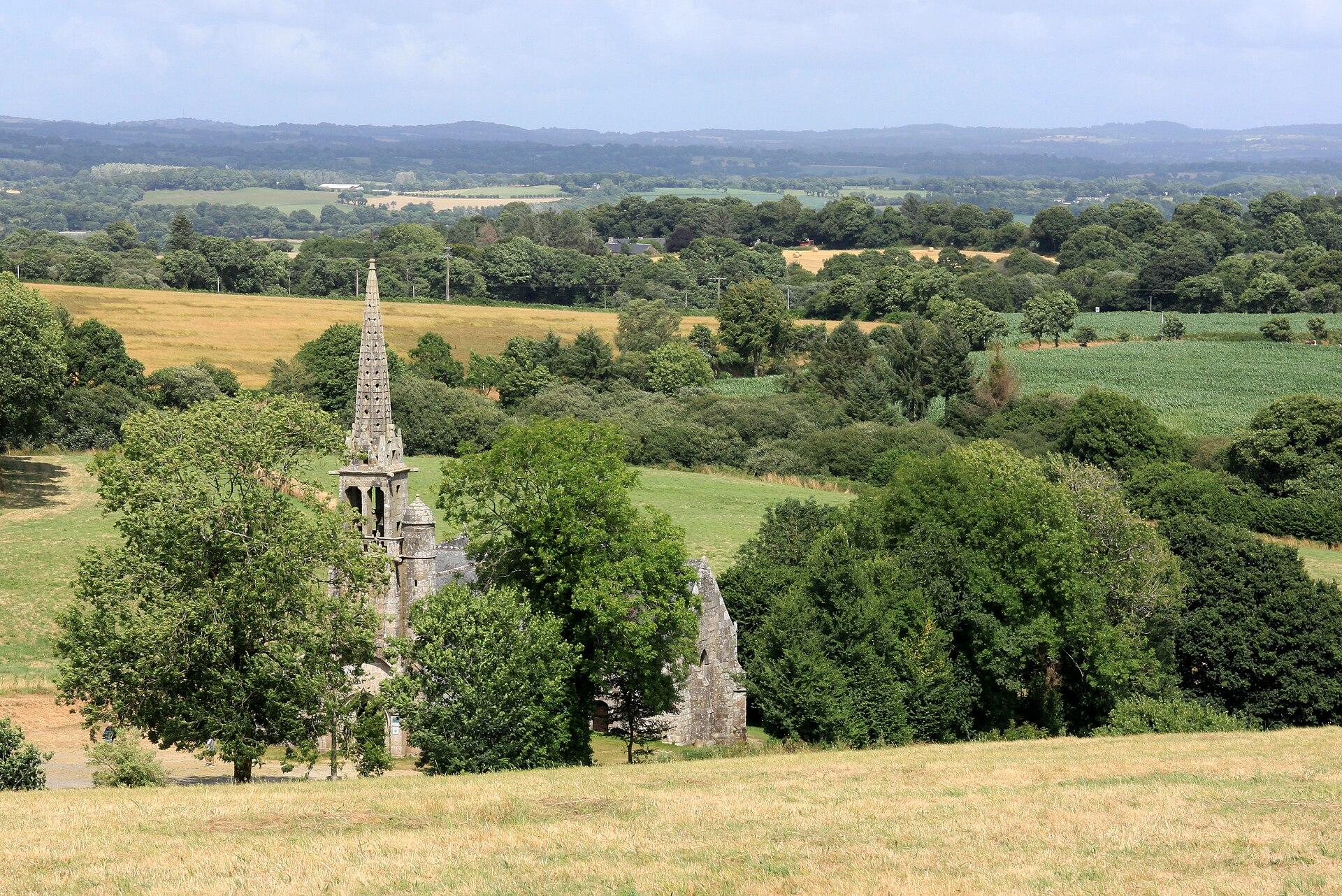
On the hill of Quénéquillec, in Carnoët, more than two hundred granite statues stand in an open Central Brittany landscape. Most are around four metres tall and weigh several tonnes, and each represents a saint or a great figure of the Breton religious tradition. The effect is striking, and a misunderstanding must be cleared up straight away: these statues are not old. They are neither medieval nor megalithic. The first was carved in 2009, and the two hundredth in 2025. It is a contemporary project, and it is far from finished. The project was born in July 2008, led by an association whose founders, Philippe Abjean, Sébastien Minguy and Philippe Hajas, set an outsized ambition: to one day bring together a thousand monumental sculptures. The first work, in 2009, tackled the seven founding saints of Brittany, whose names were given to the seven old bishoprics of the Tro Breiz pilgrimage: Corentin for Quimper, Pol Aurélien for Saint-Pol-de-Léon, Tugdual for Tréguier, Brieuc for Saint-Brieuc, Malo for Saint-Malo, Samson for Dol-de-Bretagne and Patern for Vannes. These seven, smaller than those that followed, still surround the feudal mound at the centre of the site. The thousand statues remain a goal, not the current count: at this pace, the project will span several generations. What people really come for here is the Brittany of place names. Thousands of towns, parishes, chapels and springs bear a saint’s name, and the prefixes Plou, Lan, Loc and Tre point to others. These names go back to the Early Middle Ages, the 5th, 6th and 7th centuries, when monks from Wales, Cornwall and Ireland helped bring Christianity to Armorica. For many of these figures, historical information is thin: they are known through oral traditions and saints’ lives written centuries later. Some are documented, others are almost entirely legend, and many were honoured by local worship long before any modern canonisation. The sculptors treat them with great freedom, playing on their attributes: a seafaring saint with his boat, a saint carrying his own head, a dragon, a spring, an animal. Granite is the other subject of the place. The association uses only Breton granite, from about ten different quarries, giving stones that are light grey, dark grey, pink, russet, bluish or almost white. The site has become a geological showcase as much as an artistic one, and the works are meant to age: lichens, mosses, patinas, oxidation. Styles are far from uniform, from strong realism to almost complete abstraction depending on the artist, and several dozen sculptors have worked here. Two things to know before you come. First, the site is free and open twenty-four hours a day all year round: only the car park is paid, and the route is not lit, so a night visit is not advised on this natural, hilly ground. Second, the statues are carved on site, in front of the public, during the spring and summer sculpting sessions, on weekdays: the best reason to choose your date. And the hill had a history long before 2009, since the giants surround a feudal mound, the Saint-Gildas chapel built around 1500 and an old devotional fountain where horses were brought to be blessed.
What you will see
- More than two hundred monumental statues, in a project that aims for a thousand in the very long term
- Contemporary works, carved since 2009, not ancient stones
- The seven founding saints of Brittany around the feudal mound, the site’s first work
- Grey, pink, russet, bluish, almost white
- Sculptors at work in front of the public during the spring and summer sessions
- Completely free access to the site, open day and night all year round
Show 4 more pointsHide
- The feudal mound and its view over Central Brittany
- The Saint-Gildas chapel, around 1500, listed as a historic monument, with its 16th century painted wooden screen
- The Saint-Gildas fountain, where horses were brought to be blessed
- A site that changes from year to year: come back five years later and you see something new
Practical information
- Address
- Quénéquillec, 22160 Carnoët, Côtes-d’Armor
- Public transport
- Mainly by car: via the N164 through Carhaix then the D787, or the N12 and the Callac exit. Callac and Carhaix stations are in the area, but you need to arrange the last stretch. On foot, the site is on the GR 37 “Cœur de Bretagne” trail.
- Parking
- Landscaped car park about 250 metres from the entrance, along a dirt track, open 24 hours a day: 300 car spaces, 40 campervans, 40 motorbikes, 10 coaches and 12 disabled spaces, with a drop-off point closer to the entrance. Campervans allowed up to 24 hours, but without water or electricity: it is parking, not a service area. No charging point in the car park; the nearest are in Carnoët village.
- Pets
- Dogs welcome on a lead. The site is one of the best options in the region for a visit with a dog.
- Accessibility
- Partly accessible. The statues cover about 8 hectares of natural ground, on unsurfaced, hilly and sometimes muddy dirt paths: one route lets you cover a large part of the site in a wheelchair, but not all of it. The site does not lend wheelchairs. The reception, shop, food area, toilets, sculpting sites and picnic area are accessible, and granite benches called korribancs are spread along the route. The guided tour in an electric buggy (six people, 45 minutes) is the best solution if walking is very difficult.
- Best time
- April to June and September for the best balance of weather, crowds and active sculpting. Sunrise and late afternoon for light and calm. Winter for mist and silence, without sculptors.
Tips on the spot
- Allow two hours for a real first visit, one hour for a quick look
- To see the sculptors at work, come from April to September on a weekday: check the sculpting calendar before you go
- The site is free; only the car park is paid, a flat fee whatever the length of stay, by card at the exit
- The car park is about 250 metres from the entrance along a dirt track: there is a drop-off point closer in
- Take the audio guide or a guided tour: without the attributes explained, the statues stay silent
Show 7 more tipsHide
- Start with the feudal mound and the seven founding saints, then wander among the works
- The hill is very exposed: bring one more layer than the sky suggests, even in summer
- Natural, hilly ground: closed shoes, and an all-terrain pushchair if you have one
- After heavy rain, the paths become muddy and slippery in places
- Sunrise and late afternoon are the most beautiful times, and the site is open, but the route is not lit
- If walking is very difficult, book the guided tour in an electric buggy
- Do not climb on the sculptures: they are works of art; drones are forbidden without permission
Frequently asked questions
How do I pay?
By card at the exit machine; cash is not accepted.
When is the site open?
Twenty-four hours a day, 365 days a year, including in winter and after the shop has closed.
So can you visit at night?
The site is open, but the route is not lit and the ground is natural and hilly. A night visit is not advised.
How many statues are there?
More than two hundred in 2026. The 200 mark was passed in 2025, and the number grows every year.
Are there a thousand statues?
No. A thousand is the project’s very long-term goal, not the current number. At this pace, it will continue for several generations.
Are the statues old?
No, and that is the most common confusion. They are contemporary: the first was carved in 2009. They are neither medieval, Celtic nor megalithic.
See also all the heritage in Brittany.
Stay in Carnoët
Places to stay that are still available, with current prices, compared across the main booking platforms.
Partner link: a booking made from this map may earn us a commission, at no extra cost to you.
Read in the journal
- ChristmasWhat to do in Côtes-d’Armor during the Christmas holidaysDinan in winter, scallops, the birds of the bay and Cap Fréhel in the wind: our ideas for the 2026 Christmas holidays in Côtes-d’Armor.
- SeasonWhat to do in Côtes-d’Armor at All Saints’Pink granite, Cap Fréhel, Bréhat, the scallop season and castles: our ideas for the 2026 All Saints’ holidays in Côtes-d’Armor.
- RankingThe most beautiful beaches in Côtes-d’ArmorSaint-Guirec and Trestraou in Perros-Guirec, Coz-Pors, the Plage Bonaparte, Val-André and Cap d’Erquy: our selection of the most beautiful beaches in Côtes-d’Armor.
Traveller reviews
Nobody has reviewed this place yet.
Photographs: GolDavis · CC BY-SA 4.0 · Wikimedia Commons · Kergourlay · CC BY-SA 4.0 · Wikimedia Commons · Romainbehar · CC0 · Wikimedia Commons · Mike Finn · CC BY 2.0 · Wikimedia Commons