Village
Pont-Scorff
Pont-Scorff · Morbihan
Pont-Scorff brings together old houses, a river, craft workshops, contemporary art and a green valley in a small town where heritage and creation go hand in hand.
- Suggested time
- At least half a day, a full day with the craftspeople and Les Terres de Nataé
- Type of place
- Petite Cité de Caractère and craft village
- Atmosphere
- Artistic, green, historic and creative
- Getting there
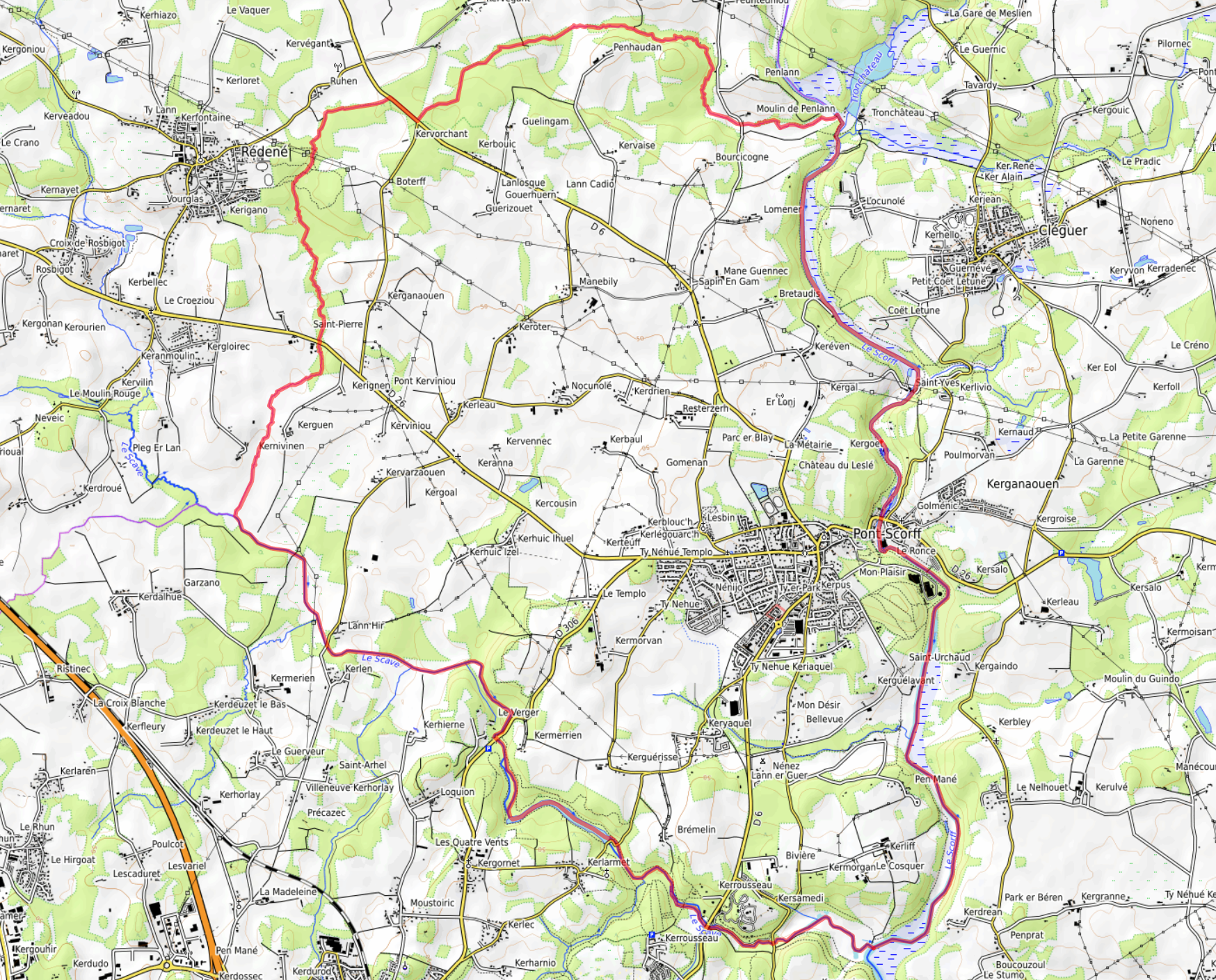
- About 11 km from Lorient. By car, bus or bike. The centre is explored on foot between the upper and lower towns.
Who this place suits
- With family
- 10/10
- As a couple
- 9/10
- With friends
- 9/10
- Solo
- 10/10
- With a dog
- 9/10
- Reduced mobility
- 7/10
These scores are calculated from what the page records: official rating, facilities, difficulty, duration and location. They are a guide, not a substitute for contacting the venue, especially about accessibility.
About
Pont-Scorff grew up around a strategic crossing on the river. The Romans built a bridge here on the Nantes-Brest route, and the town then developed between an industrial lower town and an upper town where the local notables lived. Today, this dual character is still easy to read. The town is both a Petite Cité de Caractère and a Ville des Métiers d’Art. The Cour des Métiers d’Art brings together many makers, and the streets still have several workshops of potters, sculptors, glassmakers and jewellers. The Atelier d’Estienne and the Espace Pierre de Grauw add a strong contemporary dimension. The Scorff valley provides a breath of nature, with walking paths and a wild salmon counting station. Nearby, Les Terres de Nataé round off a family day perfectly.
What you will see
- Visits: the centre is free to explore; workshops and venues have set opening times.
- Crafts: the Cour des Métiers d’Art and workshops in the village.
- Contemporary art: the Atelier d’Estienne and the Espace Pierre de Grauw.
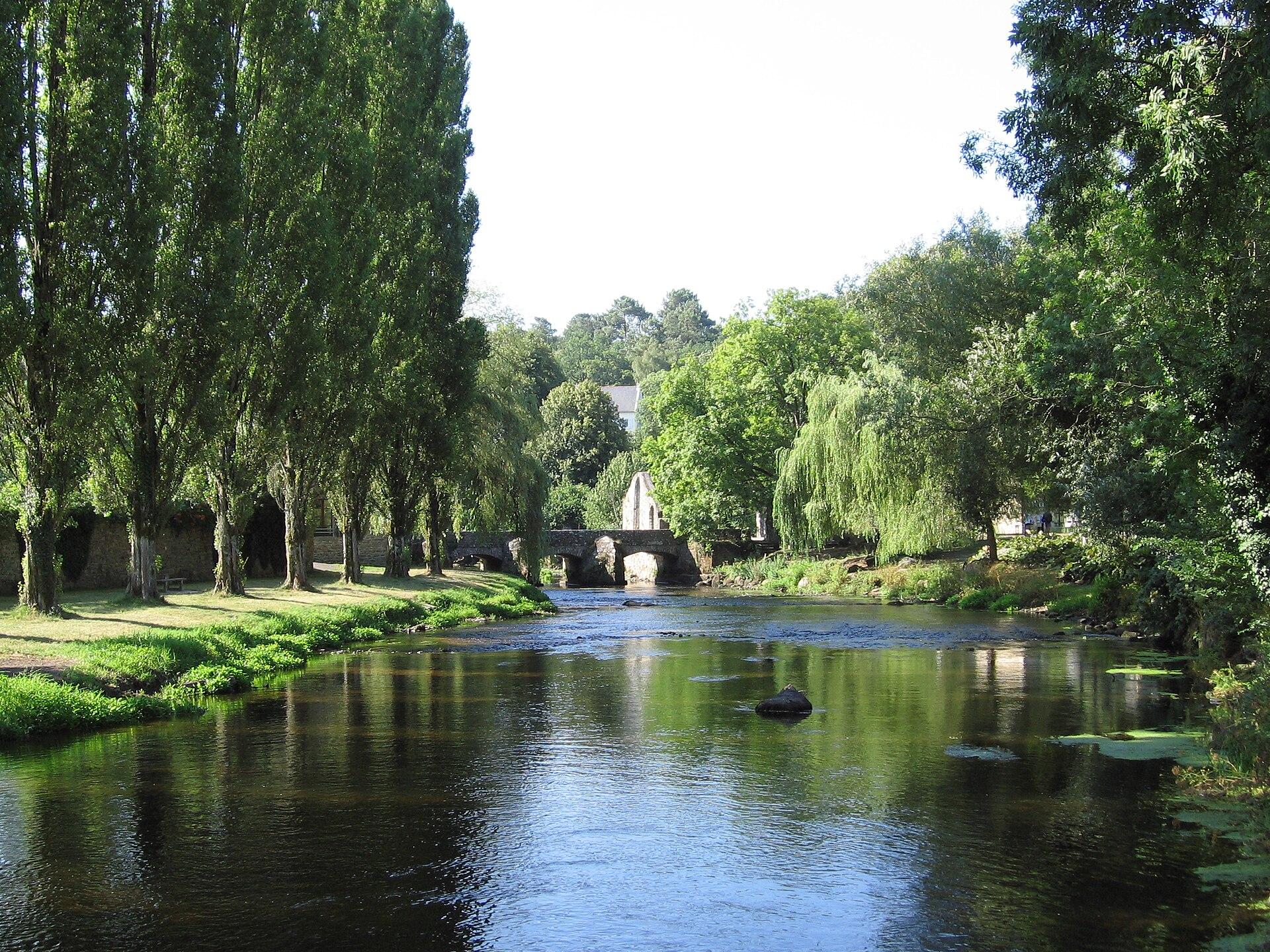
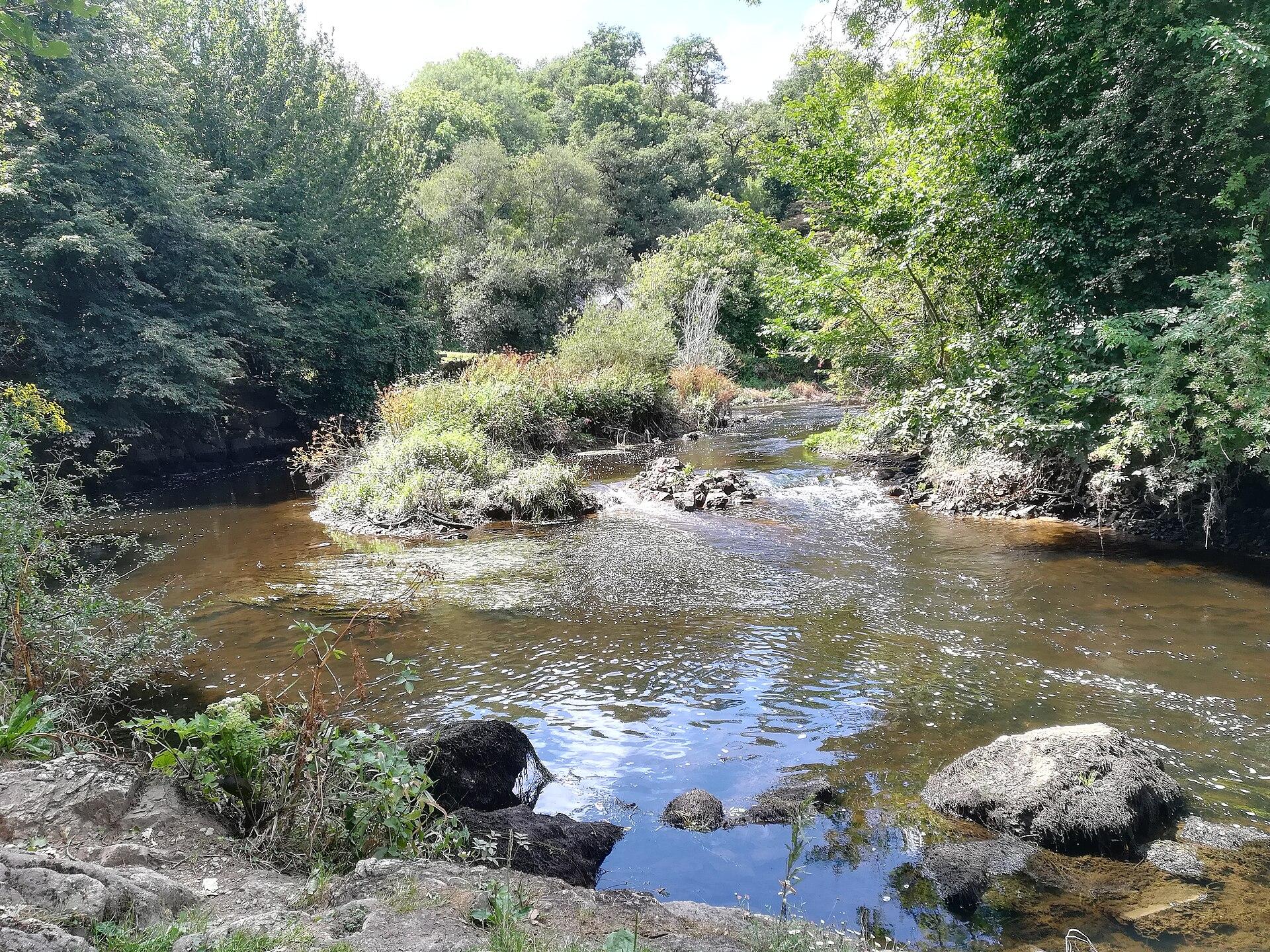
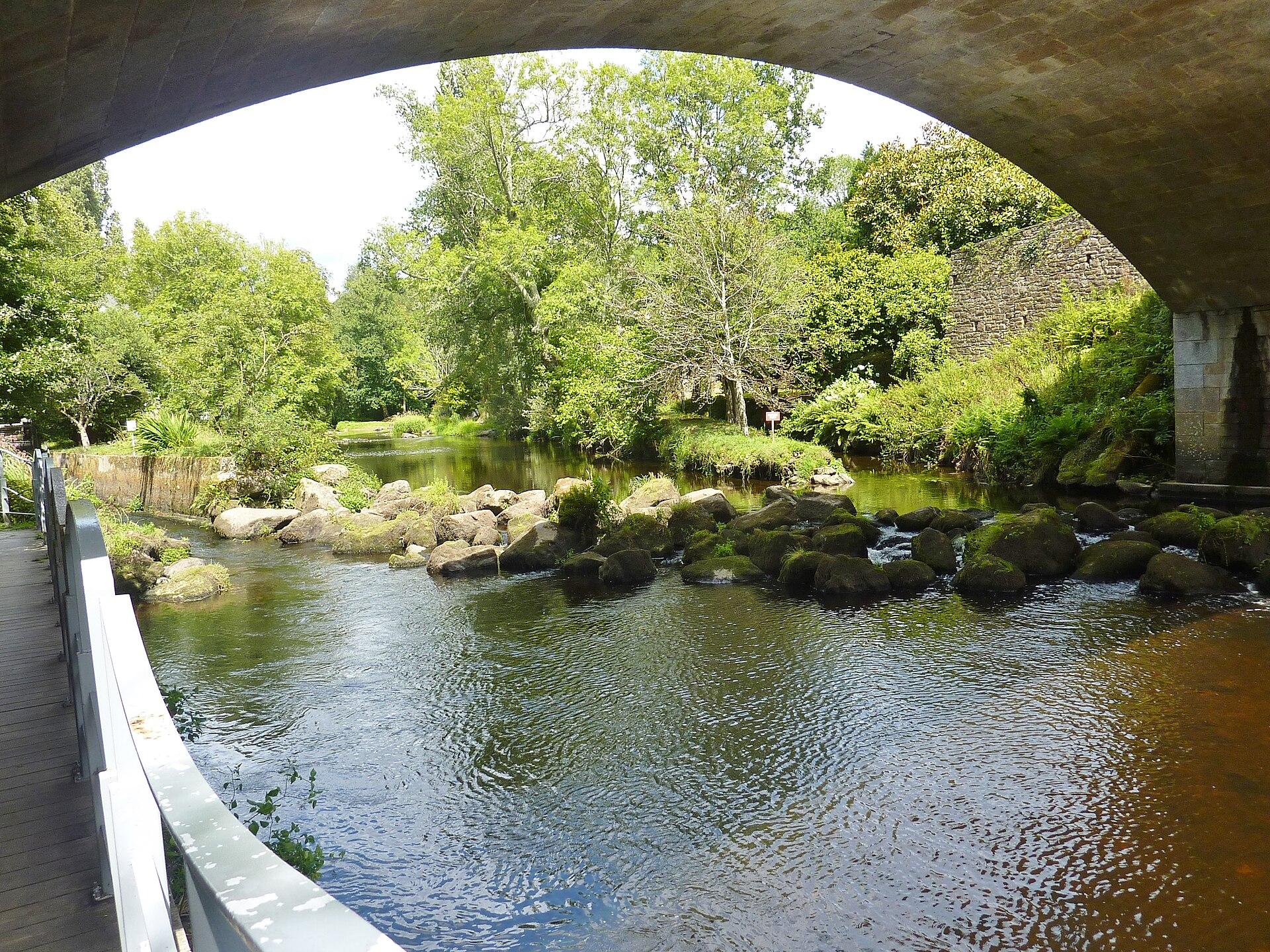
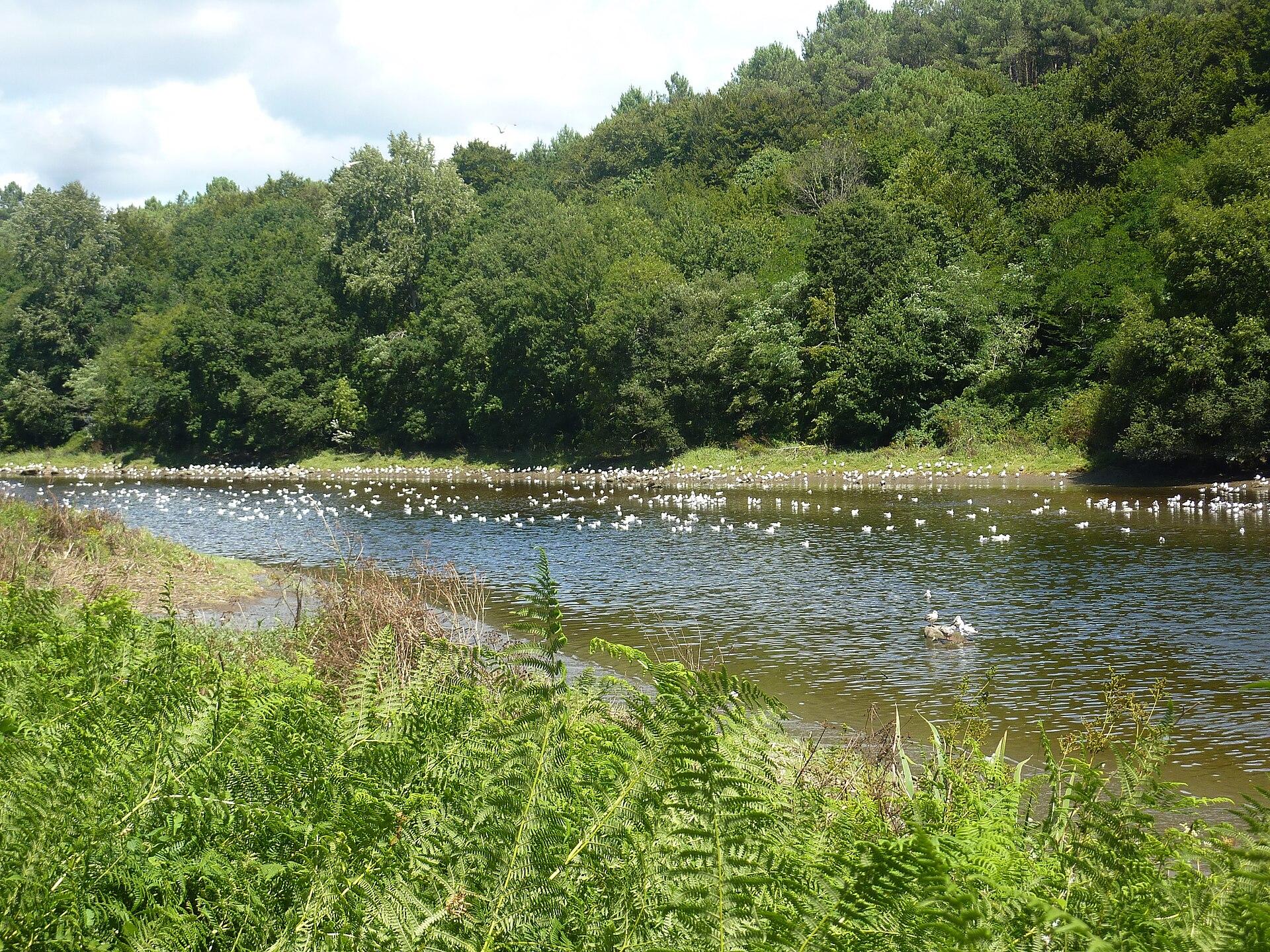
- River: the Scorff.
- Wildlife: a wild salmon counting station.
- Park: Les Terres de Nataé nearby.
Show 13 more pointsHide
- A ford and then a bridge crossed the Scorff.
- The Romans used this route between Nantes and Brest.
- The lower town developed river-related activities.
- The notables mostly settled in the upper town.
- The East India Company boosted trade with Lorient.
- Manor houses and characterful homes bear witness to this prosperity.
- Fine crafts became a strong new identity.
- The Cour des Métiers d’Art now brings together many makers.
- Contemporary art has moved into old buildings.
- The Scorff valley remains a major natural and ecological corridor.
- Combine with: Les Terres de Nataé, Lorient, the Scorff valley, Hennebont, Guidel.
- Not to be missed: the Maison des Princes, the Cour des Métiers d’Art, the Atelier d’Estienne, the Espace Pierre de Grauw, the old lanes, the bridge and the Scorff river, the lower town, the upper town, the craft workshops and the salmon station.
- Recommended: step into several workshops, visit the Cour des Métiers d’Art, see the exhibition at the Atelier d’Estienne, walk down to the river, take a short walk in the valley, add Les Terres de Nataé with the family and come for the potters’ market in August.
Practical information
- Getting there
- About 11 km from Lorient. By car, bus or bike. The centre is explored on foot between the upper and lower towns
- Food
- Restaurants and local produce make it easy to spend the day here
- Parking
- Parking in the centre; the village is explored on foot, with some slopes
- Pets
- A pleasant outdoor walk on a lead. Check the rules of the parks and galleries
- Accessibility
- The upper and lower towns involve slopes. Cultural venues have varying conditions
- With family
- A very good family destination, especially with Les Terres de Nataé
- Label
- Petite Cité de Caractère and Ville des Métiers d’Art
- Safety
- Slopes and wet ground near the river
- Best time
- Spring to autumn. Summer is especially interesting, with art events and markets
- Photography
- The old streets and the banks of the Scorff offer two very different moods. Soft light works well on the stone façades
Tips on the spot
- Arrive before 10 am in high season for fewer people; late afternoon is also calmer.
- Use the official car parks and finish on foot; on market days or big events, allow more time to park.
- Wear good shoes for cobbles, quays, paths and steps.
- Start at the tourist office or an interpretation trail if there is one; guided tours give a much richer reading of local history.
- Check the opening times of monuments and activities on the day; in winter, some close earlier.
Show 7 more tipsHide
- Take time for the side streets and small details.
- Respect the residents in the most photographed streets, and never block a private entrance for a photo.
- Have lunch early or late to find a table more easily in high season.
- In autumn, the low light and fewer visitors can be excellent.
- Allow at least half a day, a full day with the craftspeople and Les Terres de Nataé.
- Come in August for the potters’ market.
- Visit the salmon counting station on the Scorff.
Frequently asked questions
How much time should I allow?
At least half a day, a full day with the craftspeople and Les Terres de Nataé.
Is the visit free?
Exploring outdoors is free. Some monuments, museums, tours and activities are paid.
What makes it special?
Going from the upper town down to the banks of the Scorff, stepping into the craft workshops, then extending the day with contemporary art or the Terres de Nataé animal refuge park.
What is the atmosphere like?
Artistic, green, historic and creative.
When is the best time to come?
Spring to autumn. Summer is especially interesting, with art events and markets.
What are the must-sees?
The Maison des Princes, the Cour des Métiers d’Art, the Atelier d’Estienne, the Espace Pierre de Grauw, the old lanes, the bridge and the Scorff river, the lower town and the upper town.
Stay in Pont-Scorff
Places to stay that are still available, with current prices, compared across the main booking platforms.
Partner link: a booking made from this map may earn us a commission, at no extra cost to you.
Read in the journal
- ChristmasWhat to do in Morbihan during the Christmas holidaysChristmas in Vannes, the Pont-Scorff light trail, Rochefort-en-Terre lit up and Carnac in winter: our ideas for the 2026 Christmas holidays in Morbihan.
- DepartmentWhat to do in MorbihanThe Gulf, the Carnac alignments and the Quiberon peninsula: the gentlest Brittany, and the oldest.
- SeasonWhat to do in Morbihan during the All Saints’ holidaysThe Carnac alignments open to walk among, the Gulf of Morbihan, castles, the wild coast and Lorient: our ideas for All Saints’ 2026 in Morbihan.
Traveller reviews
Nobody has reviewed this place yet.
Photographs: Contributeurs du site Openstreetmap. · CC BY-SA 2.0 · Wikimedia Commons · Personnel · CC BY-SA 3.0 · Wikimedia Commons · Moreau.henri · CC BY-SA 4.0 · Wikimedia Commons