Department
What to do in Morbihan
The Gulf, the Carnac alignments and the Quiberon peninsula: the gentlest Brittany, and the oldest.
7 min read
Morbihan means “little sea” in Breton, after the Gulf that made its name. It is the most sheltered department in Brittany, and the sunniest: the south coast facing the Atlantic gets less westerly wind than the tip of Finistère, and the water is one or two degrees warmer.
It is also the department of prehistory. The Carnac alignments have nearly three thousand menhirs still standing over four kilometres of heath, raised between 4800 and 3500 BC: they are therefore older than the pyramids of Egypt and Stonehenge.
The Gulf of Morbihan
An inland sea closed by the Port-Navalo channel, nine hundred metres wide: on every spring tide, sixty million cubic metres of water pass through it in an hour. Inside, between Berder and the Île de la Jument, the current reaches 9.1 knots, the second fastest in Europe after the Raz Blanchard. The Gulf is said to have as many islands as there are days in the year: it has forty two, two of which are inhabited and served by boat, the Île aux Moines and the Île d’Arz.
Around the Gulf
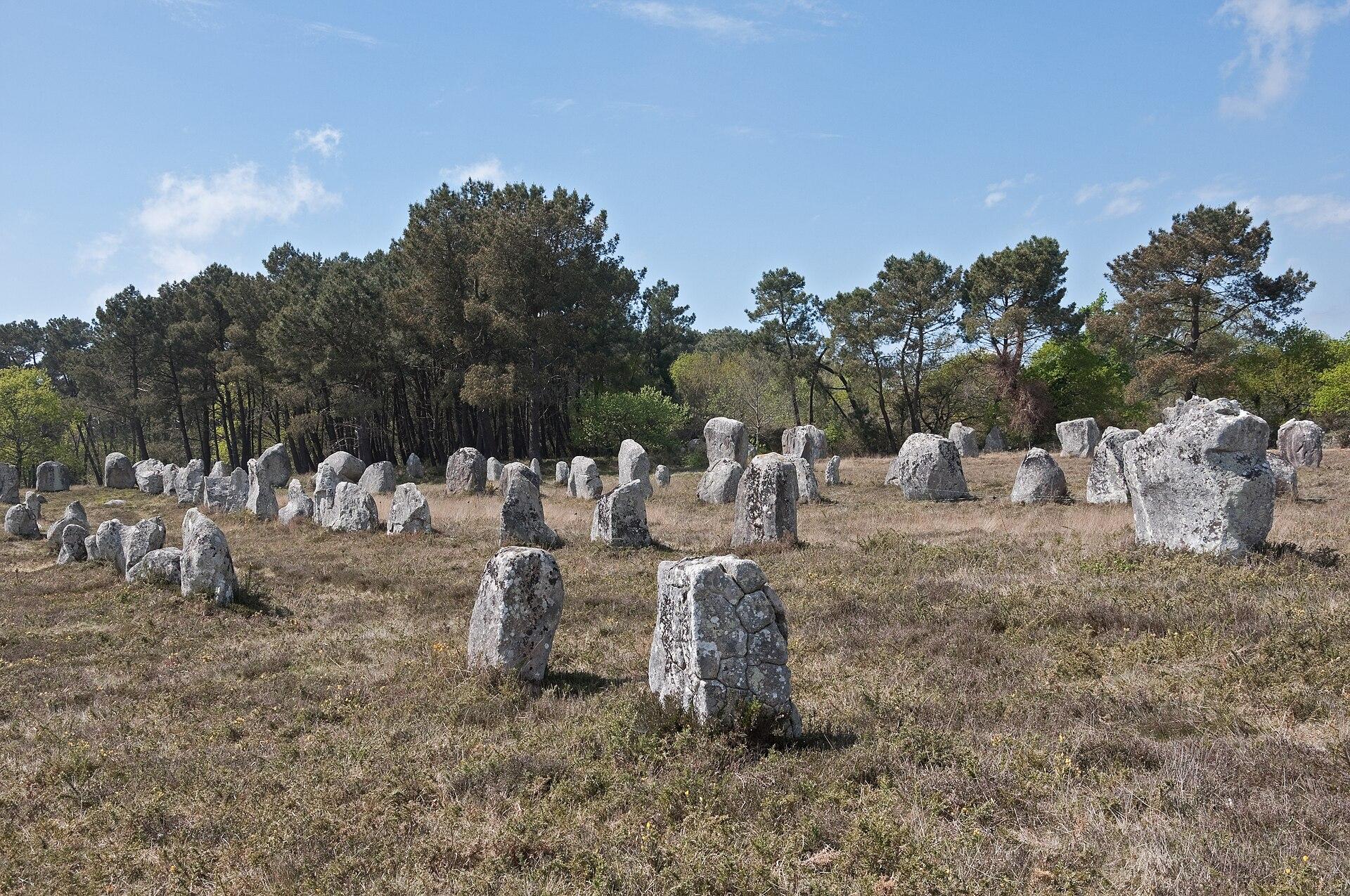 Heritage siteCarnac StonesCarnac · 1 h 30 to half a dayNearly 3,000 standing stones over four kilometres, raised more than six thousand years ago, at Le Ménec, Kermario, Le Manio and Kerlescan. Inscribed as a UNESCO World Heritage Site on 12 July 2025.
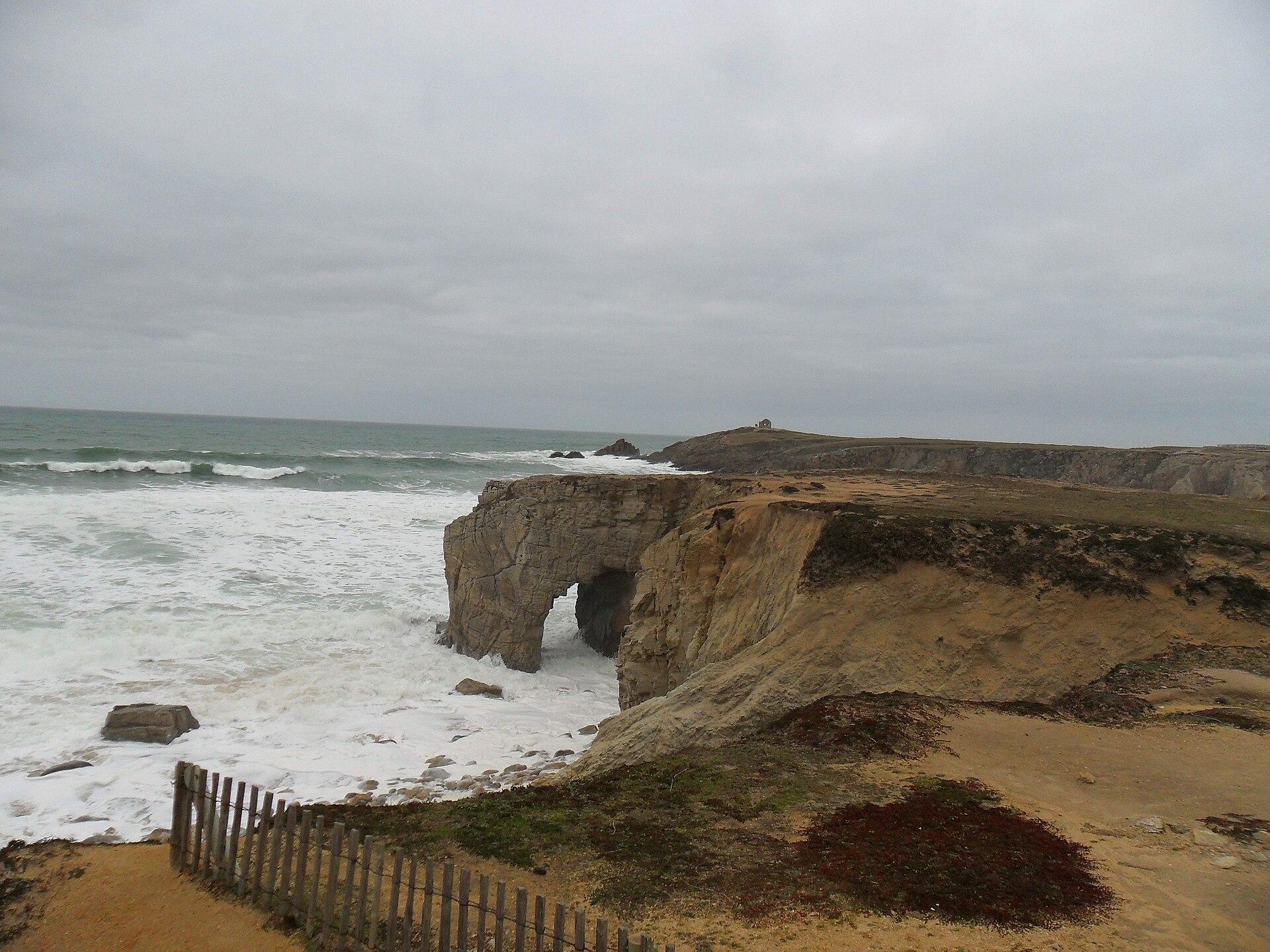 Natural siteQuiberon Côte SauvageQuiberon · 1 hour to half a dayNearly ten kilometres of granite cliffs facing the Atlantic, from Portivy to the Château Turpault: the Port-Blanc arch, the Pointe du Percho, heathland and megaliths. Swimming strictly forbidden.
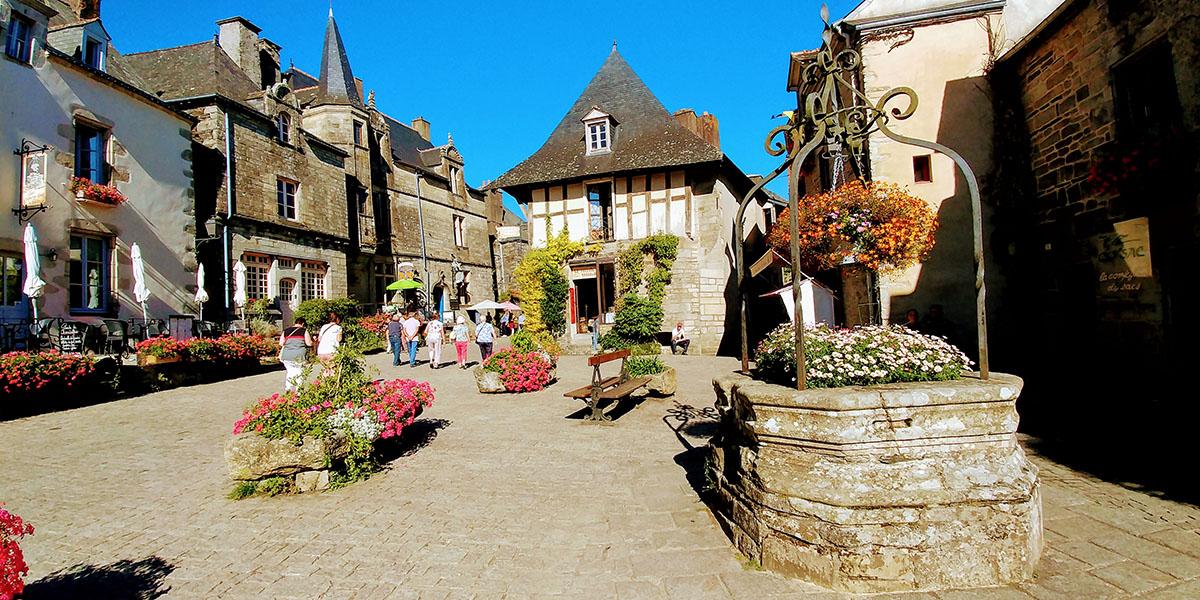 VillageRochefort-en-TerreRochefort-en-Terre · 2 hours to half a day, more during the Christmas eventsRochefort-en-Terre creates an almost theatrical setting of granite houses, half-timbering, flowers, craftspeople and a castle perched on a rocky spur.
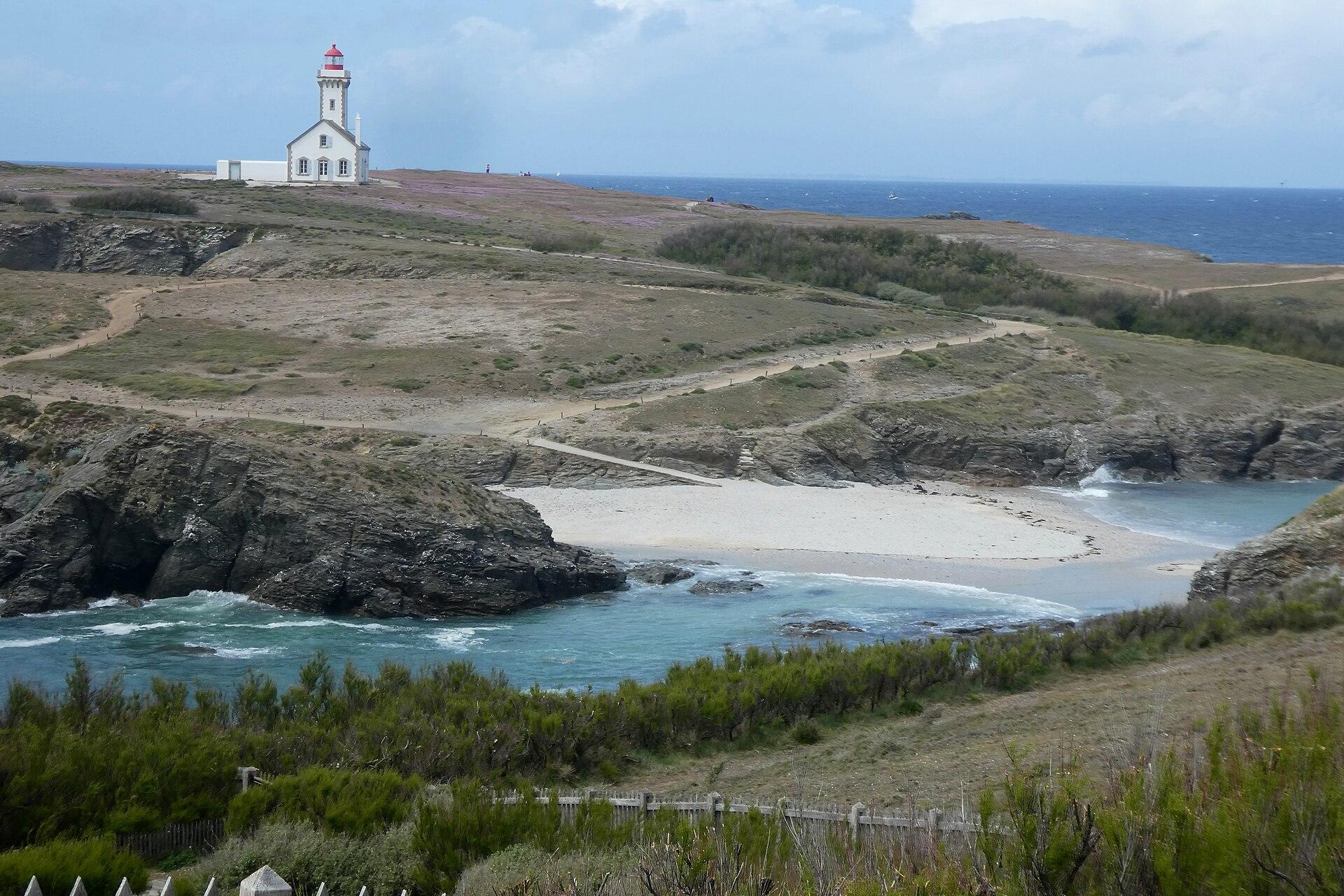 ViewpointPointe des PoulainsSauzon, Belle-Île-en-Mer · 2 hours to half a day.The jewel of north-west Belle-Île, with an 1868 lighthouse, Sarah Bernhardt’s estate and a 360° ocean view, open all year but with an islet cut off at high tide.
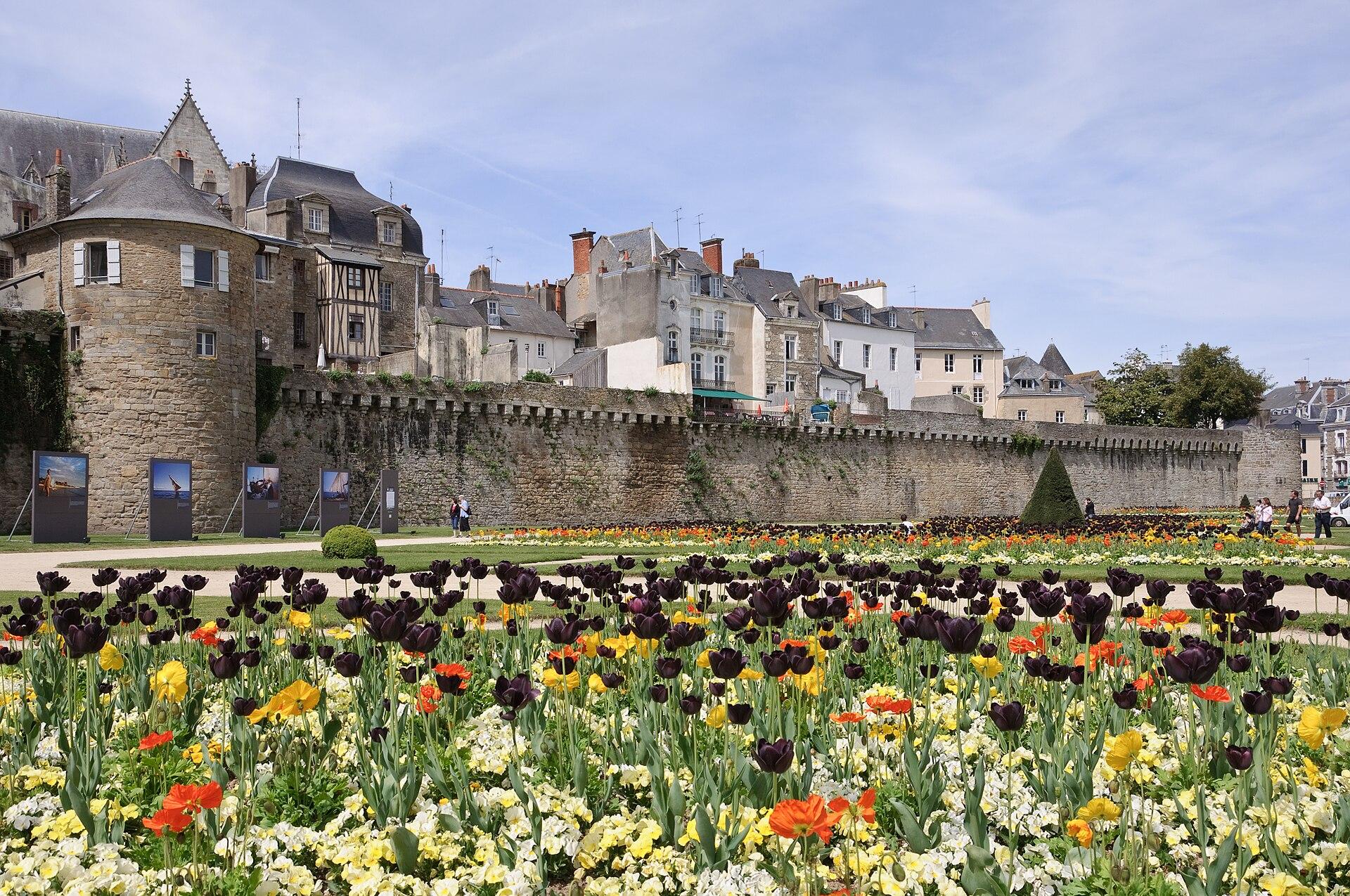 Heritage siteVannes walled townVannes · Half a dayA walled town in Morbihan that keeps nearly a kilometre of ramparts, five of its seven gates and two thousand years of continuous urban history.
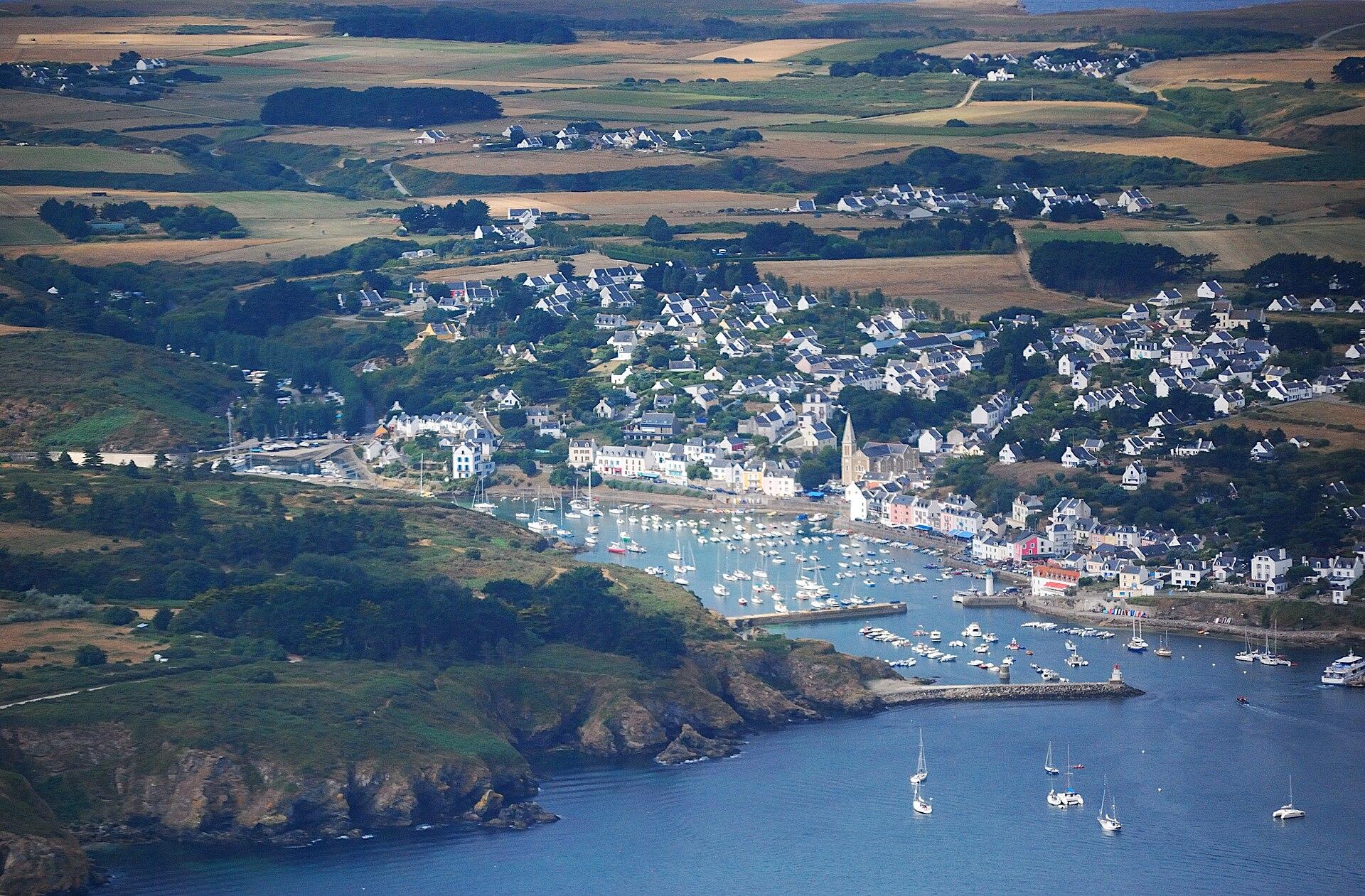 VillageSauzonSauzon · 2 hours to half a day, a full day with the Pointe des Poulains or DonnantSauzon is Belle-Île’s picture-postcard little harbour, with pastel facades, boats, terraces and easy access to the Pointe des Poulains, Donnant and the wild coast.
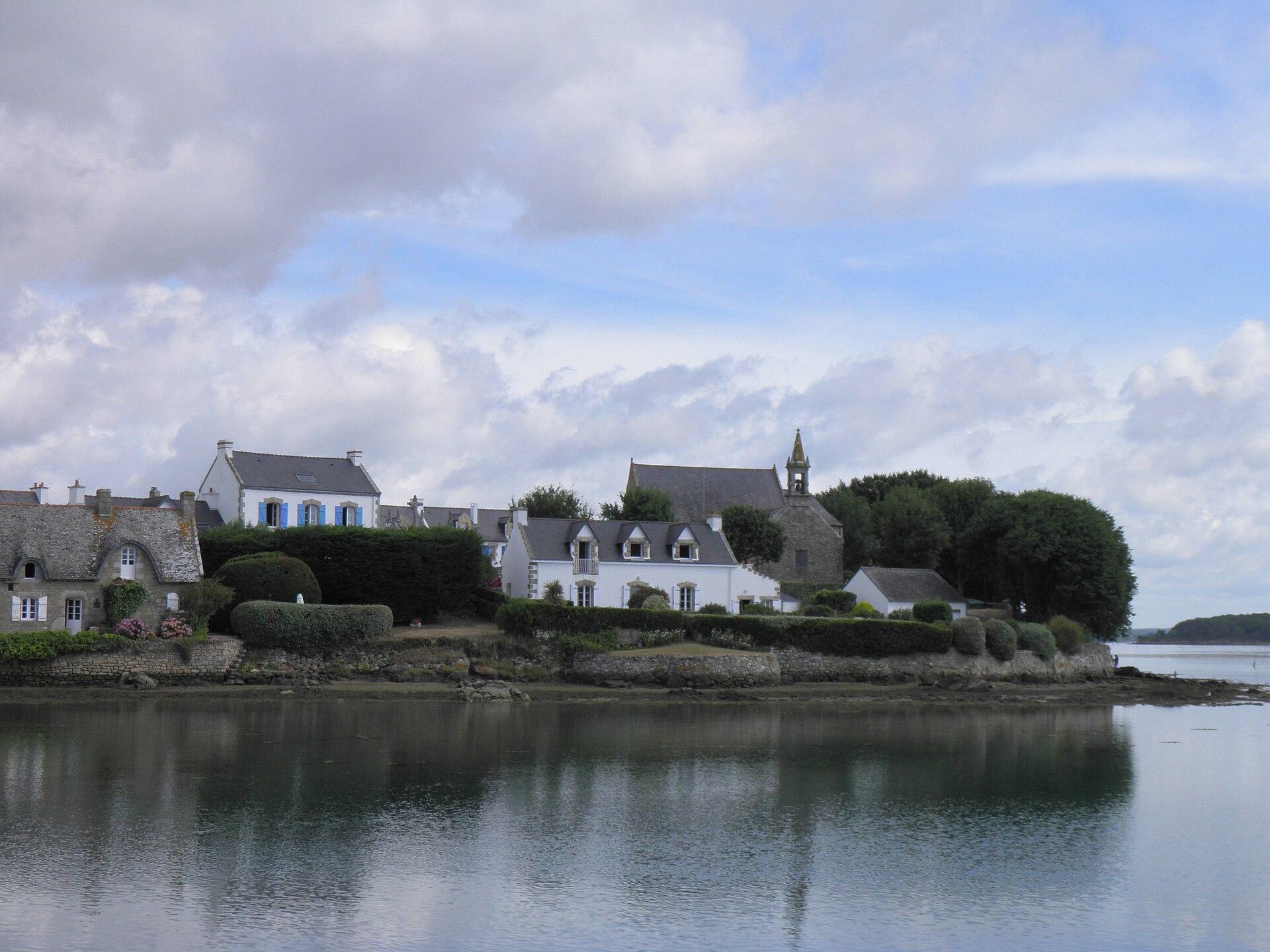 VillageSaint-CadoBelz · 1 to 2 hours on site, half a day with Belz, Port Niscop or ÉtelLinked to Belz by a little stone bridge, Saint-Cado brings together fishermen’s houses, a Romanesque chapel, a calvary and one of the most famous postcards in Morbihan: the Nichtarguer house with its blue shutters.
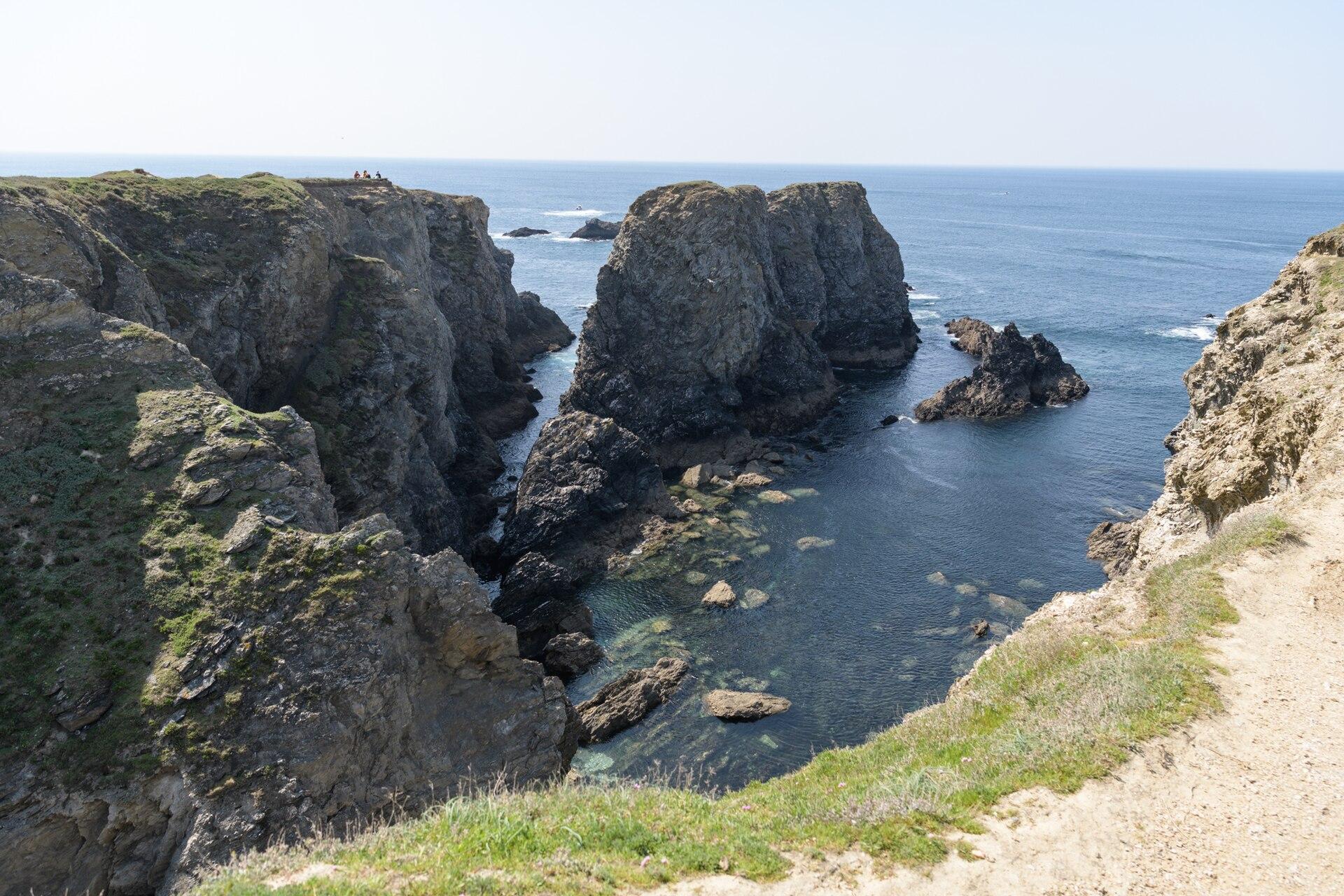 ViewpointAiguilles de Port CotonBangor · 45 minutes to 1 h 30 for the site, longer for a hike or the Monet trail.One of Belle-Île-en-Mer’s most famous landscapes, immortalised by Claude Monet in 1886, with rock needles, cliffs and a spectacular sunset.
Carnac and the megaliths
Access to the stone fields is free from October to March. From April to September, you can only go in on a guided tour, of about an hour and to be booked: the heath has suffered from trampling, and it is the only way to let it recover. Many July visitors find this out on the spot, and regret it.
The heritage of Morbihan
- Heritage siteCarnac StonesCarnac · 1 h 30 to half a dayNearly 3,000 standing stones over four kilometres, raised more than six thousand years ago, at Le Ménec, Kermario, Le Manio and Kerlescan. Inscribed as a UNESCO World Heritage Site on 12 July 2025.
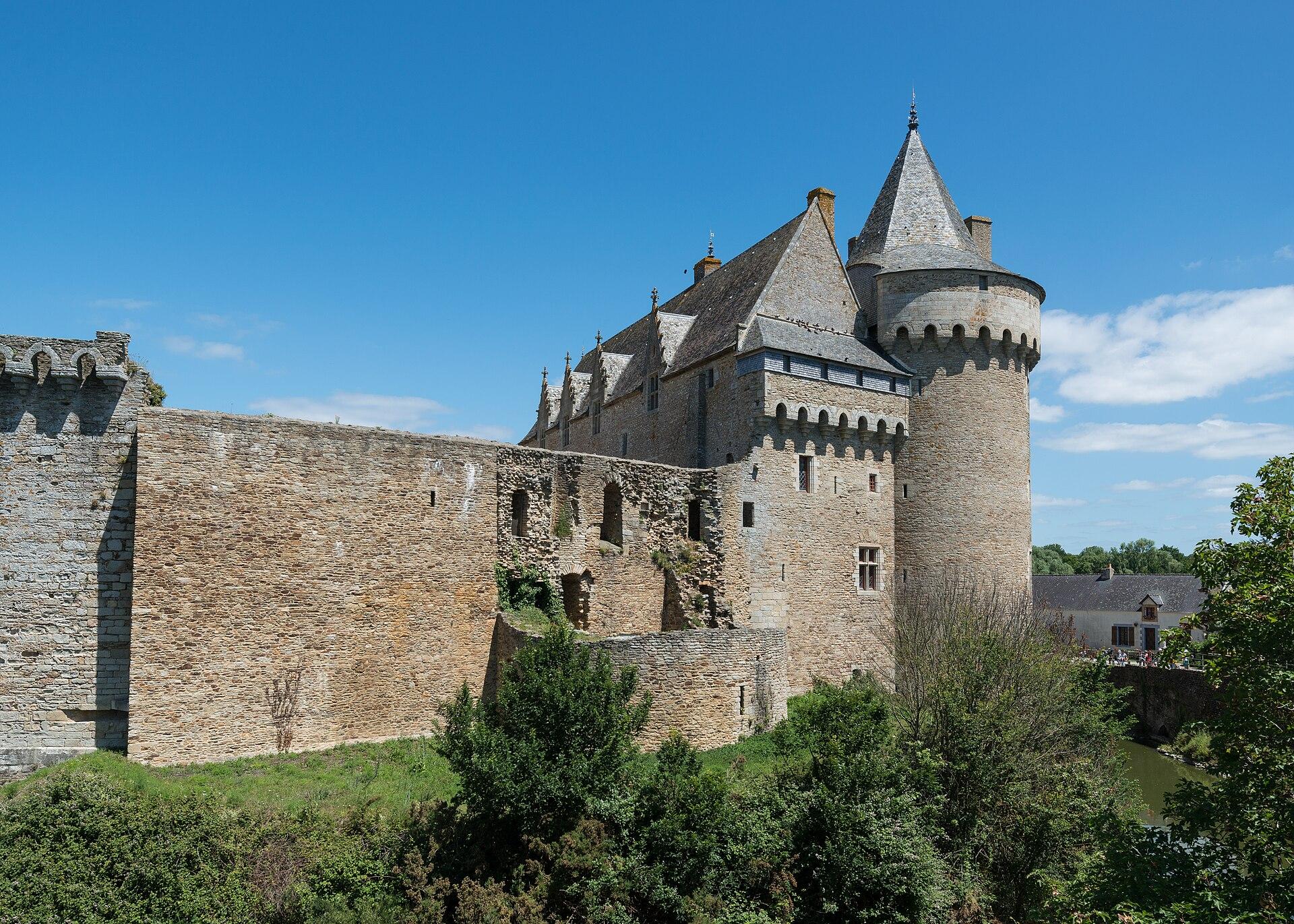 CastleSuscinio CastleSarzeau · 2 to 3 hoursBetween marshes and ocean, Suscinio was one of the great residences of the Dukes of Brittany; restored, it now combines a medieval castle, immersive displays and a natural estate.
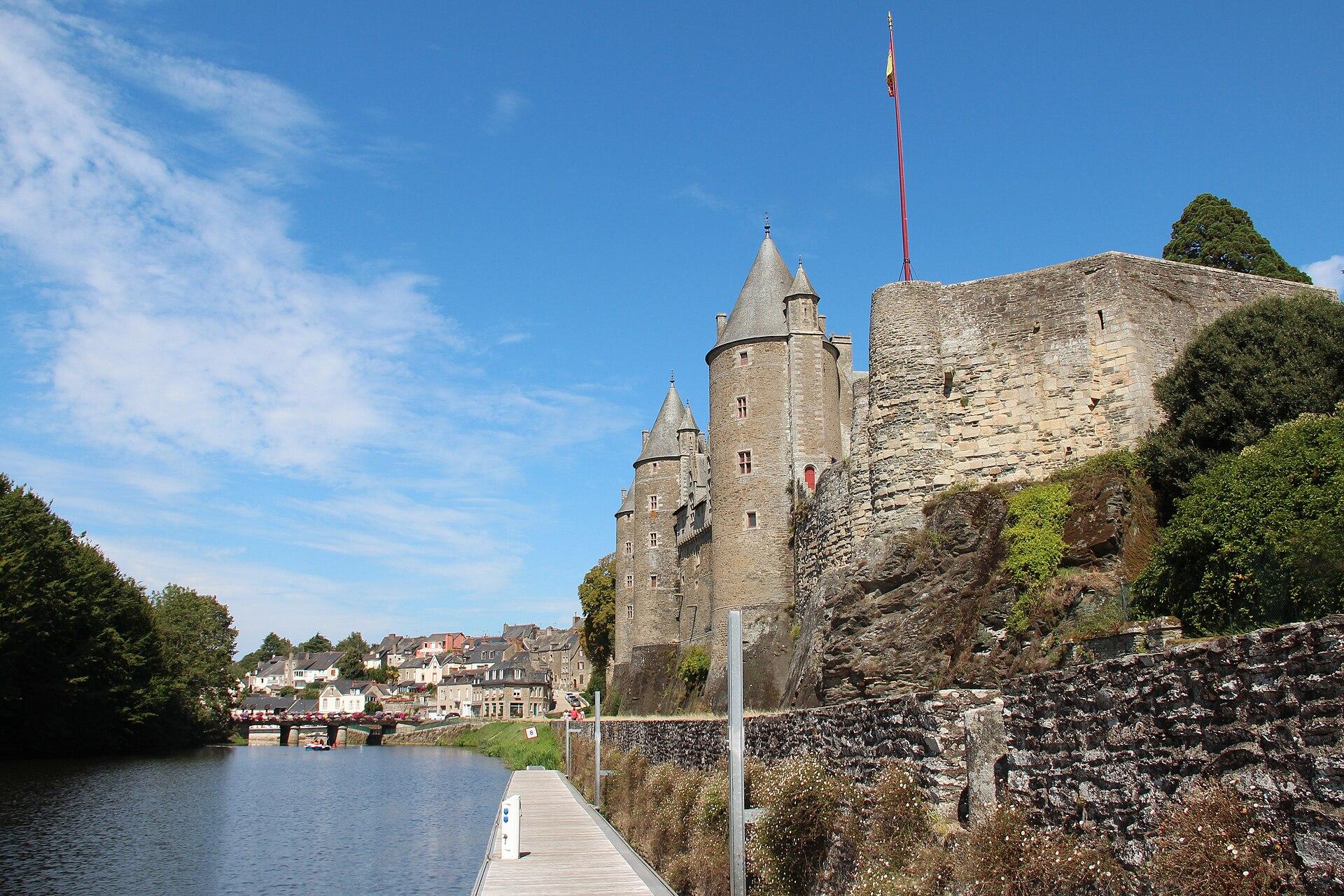 CastleChâteau de JosselinJosselin · 2 to 3 hoursAbove the Oust, Josselin combines powerful feudal towers, a finely carved Renaissance facade, furnished interiors and ten centuries of Rohan family history.
- Heritage siteVannes walled townVannes · Half a dayA walled town in Morbihan that keeps nearly a kilometre of ramparts, five of its seven gates and two thousand years of continuous urban history.
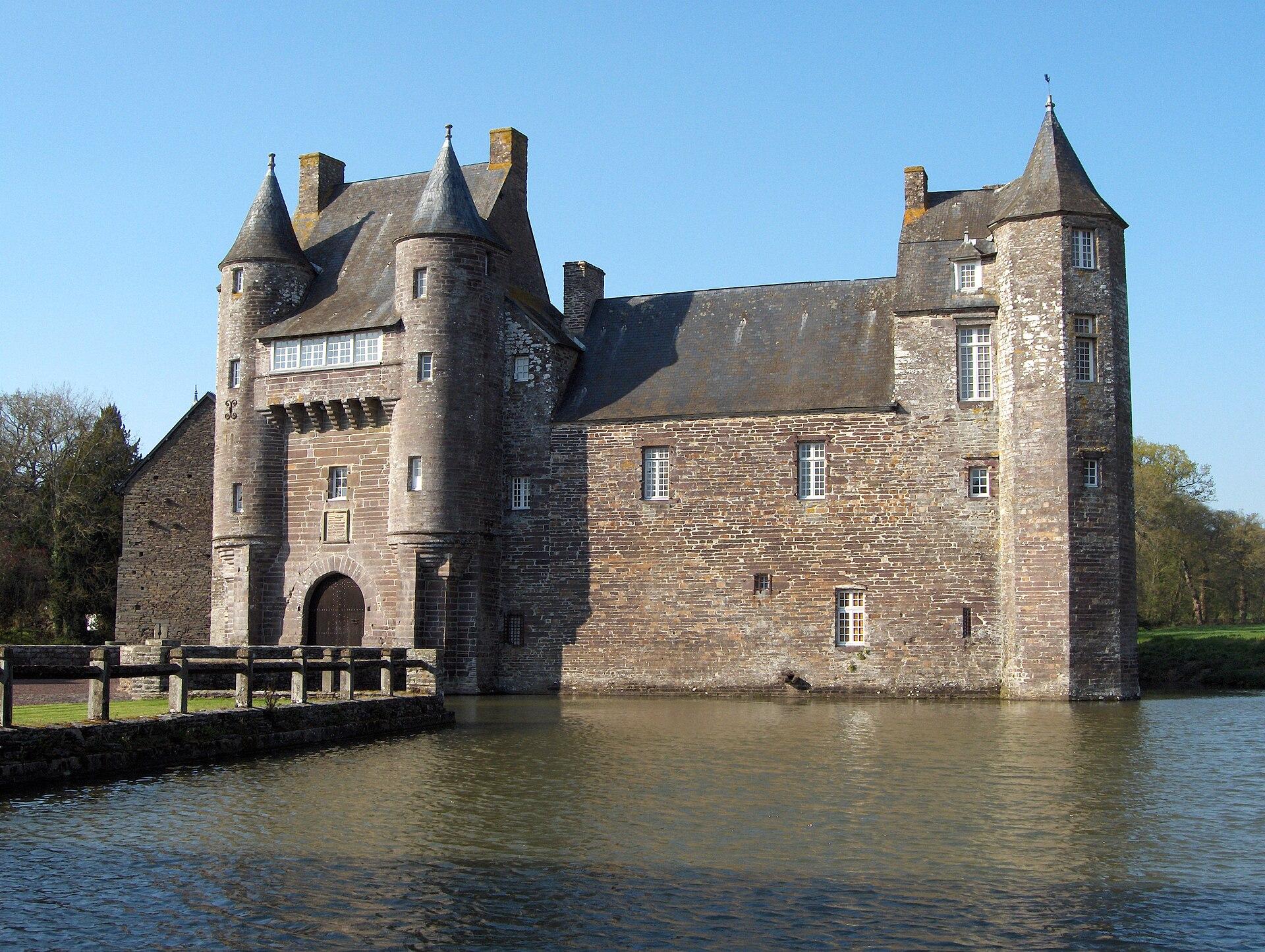 CastleChâteau de TrécessonCampénéac · 20 to 40 minutes to see it from outsideBy the water, in the world of Brocéliande, Trécesson is a private château of red schist surrounded by moats and legends.
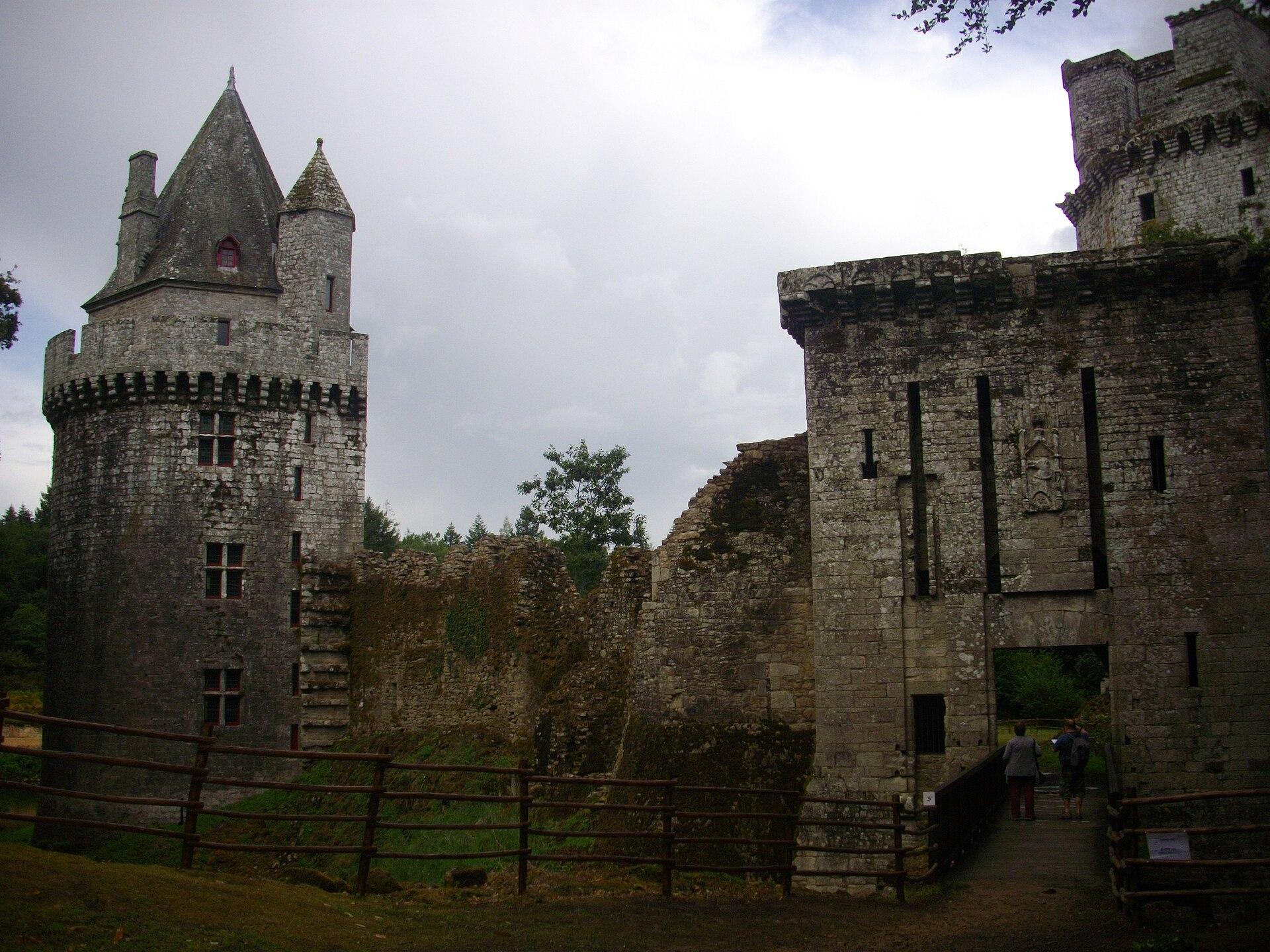 CastleLargoët Fortress / Towers of ElvenElven · 1 h 30 to 2 hIn a wooded park in Elven, Largoët keeps a huge octagonal keep and a round tower, spectacular remains of a great medieval fortress.
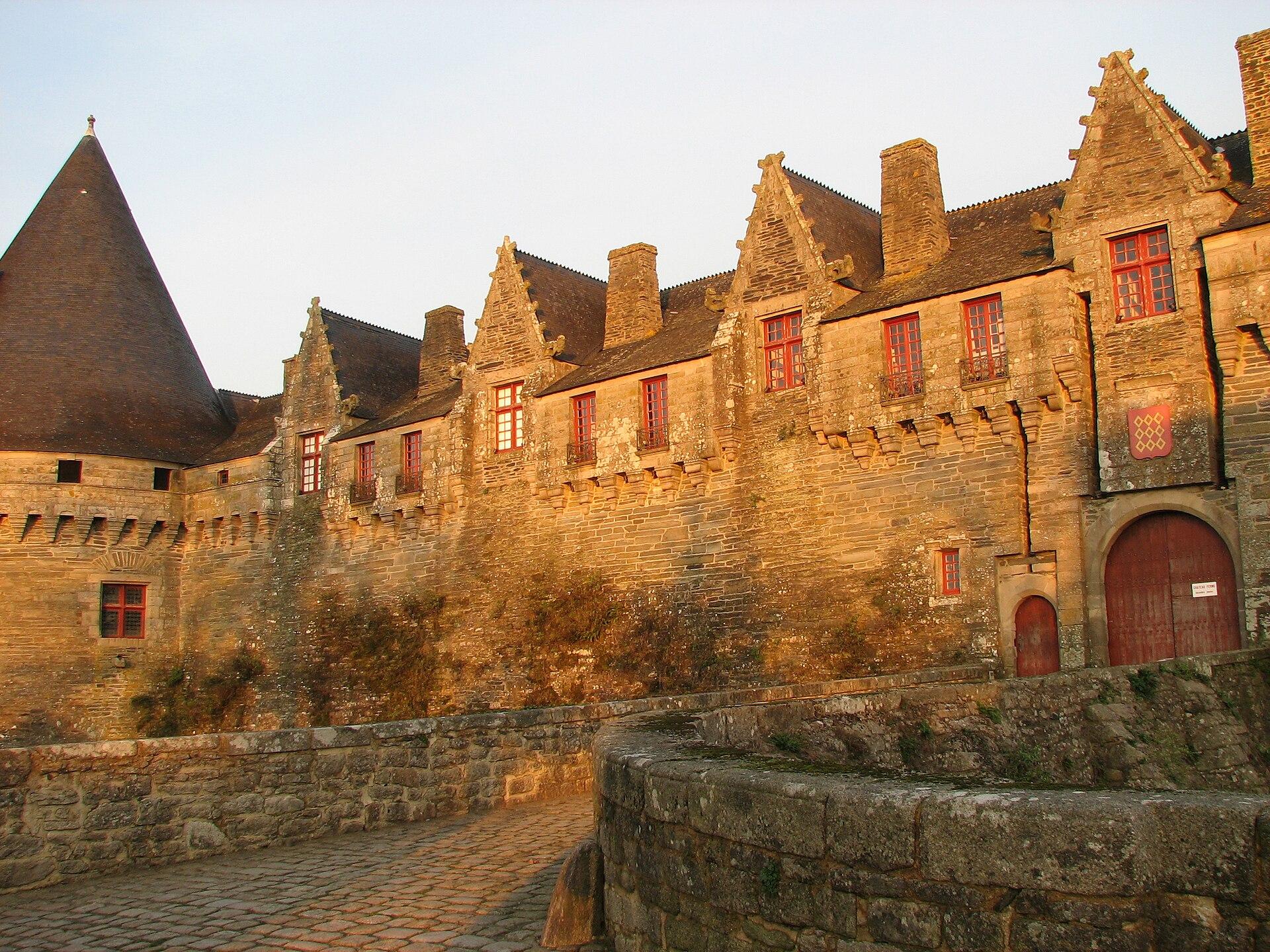 CastleChâteau de Pontivy / Château des RohanPontivy · 1 h to 1 h 30In the heart of Pontivy, the Château des Rohan is a late 15th-century fortress with four great towers, restored after major works.
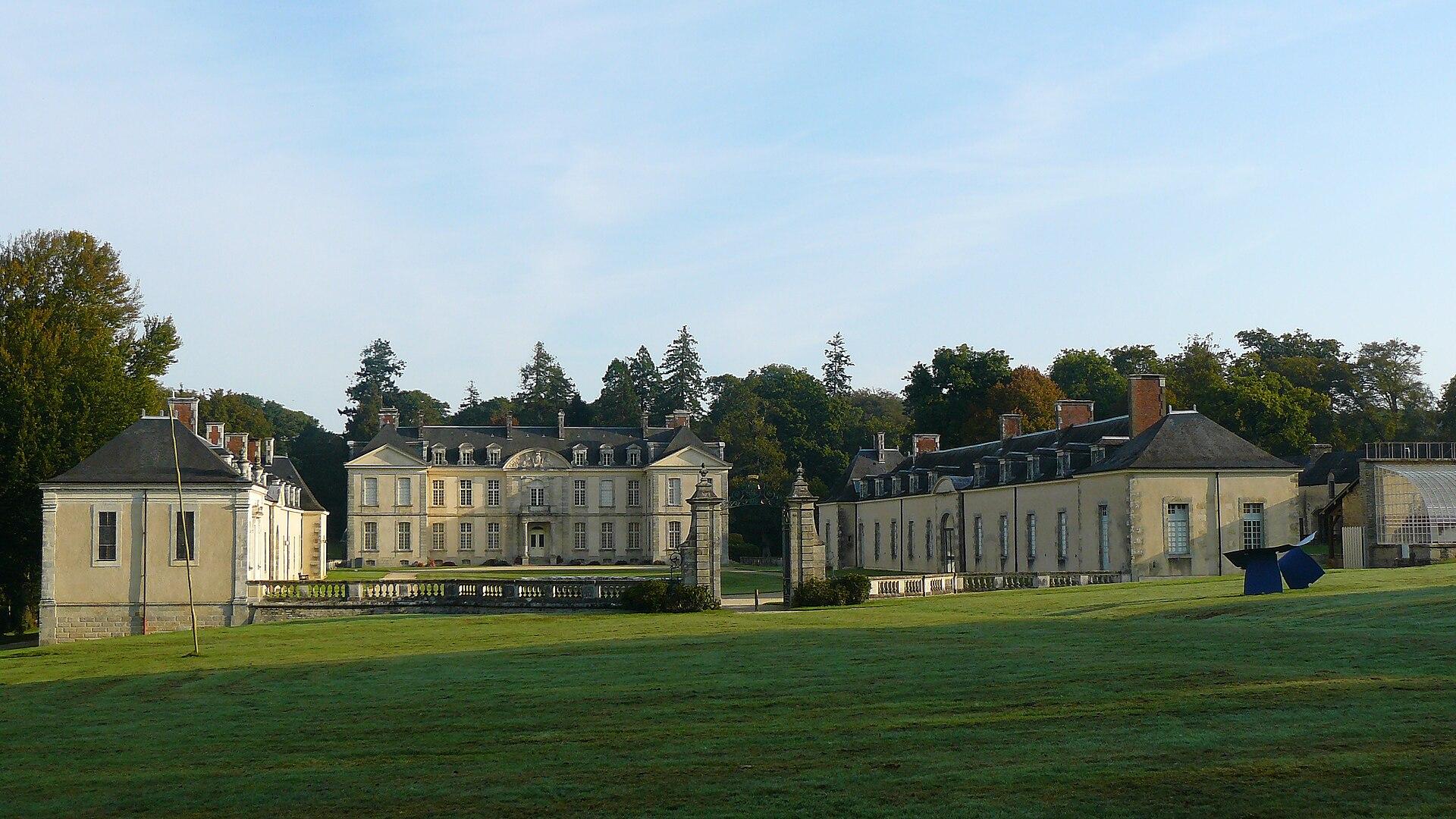 CastleDomaine de KerguéhennecBignan · 1 h 30 to 3 hours for the parkIn Bignan, Kerguéhennec combines an 18th-century château, a vast landscaped park and one of the main contemporary sculpture parks in Brittany.
The Quiberon peninsula
Fourteen kilometres long and two hundred metres wide at its narrowest point, with two faces: the wild coast to the west, where swimming is forbidden in places because of the currents, and the sheltered east coast, with its fine sand beaches. In July, the single road that serves it is jammed. The seasonal train avoids the traffic: the Tire-Bouchon, named after the jams it lets you skip, links Auray to Quiberon over twenty seven kilometres, every day in July and August, and carries a hundred and fifty thousand passengers each summer.
The beaches of Morbihan
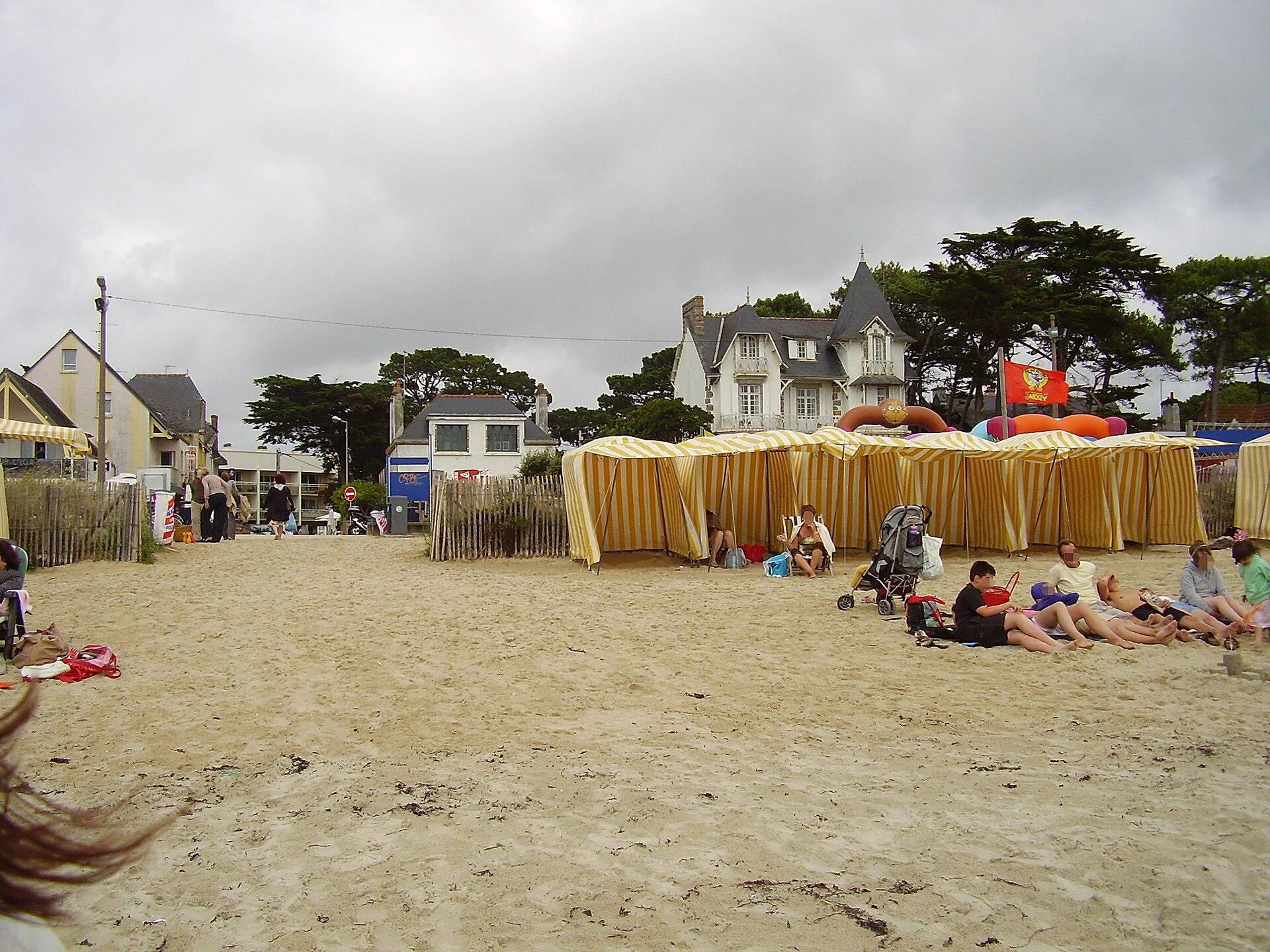 BeachCarnac Grande PlageCarnac · 3 hours to a full dayAt Carnac-Plage, two kilometres of south-facing fine sand offer lifeguarded swimming, two beach clubs, water sports, facilities for disabled visitors, restaurants and a seafront promenade.
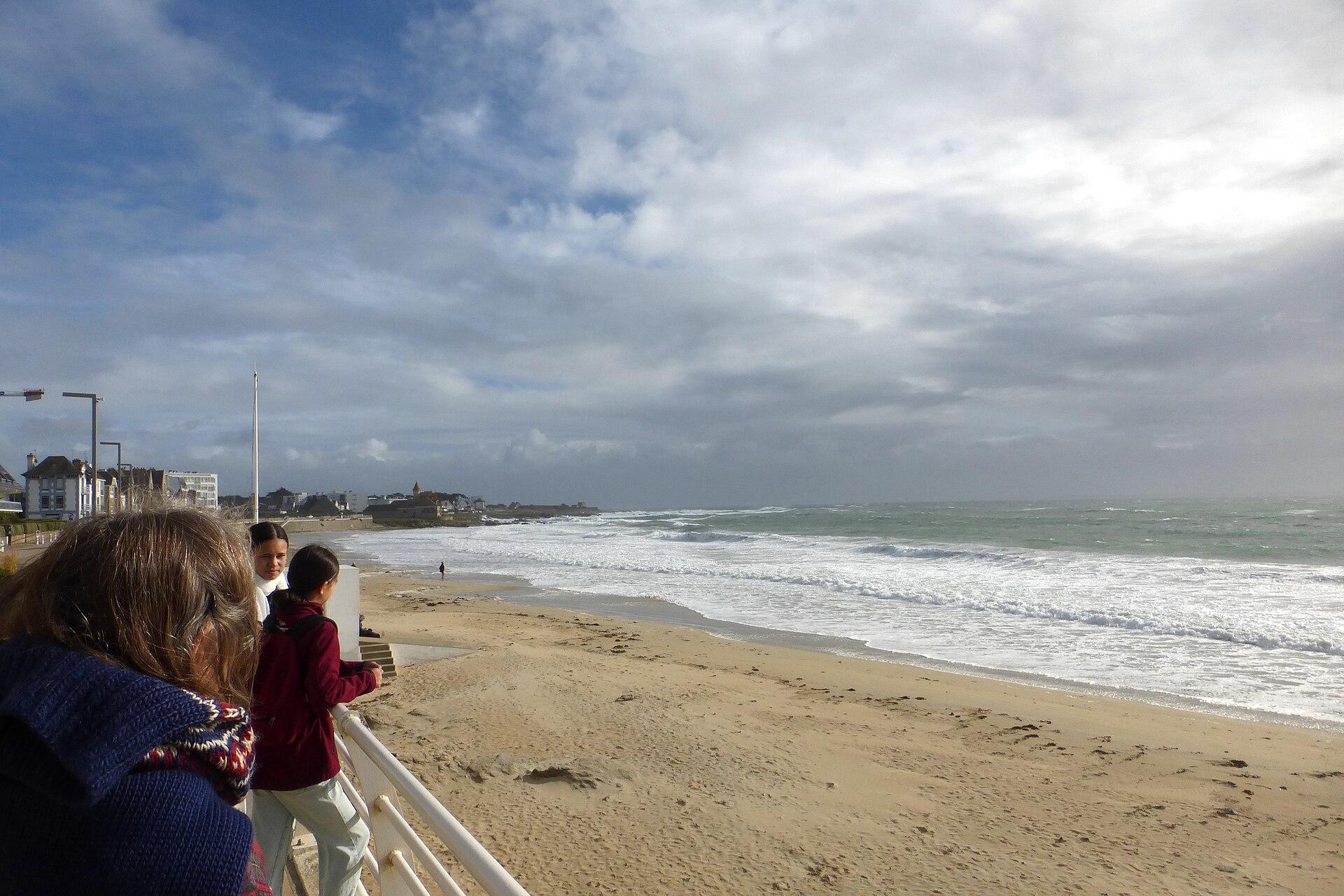 BeachGrande Plage de QuiberonQuiberon · 3 hours to a full dayIn the heart of Quiberon, this 900 m south-facing beach combines fine sand, a promenade, restaurants, summer lifeguards, a kids’ club, showers, toilets and facilities for disabled visitors.
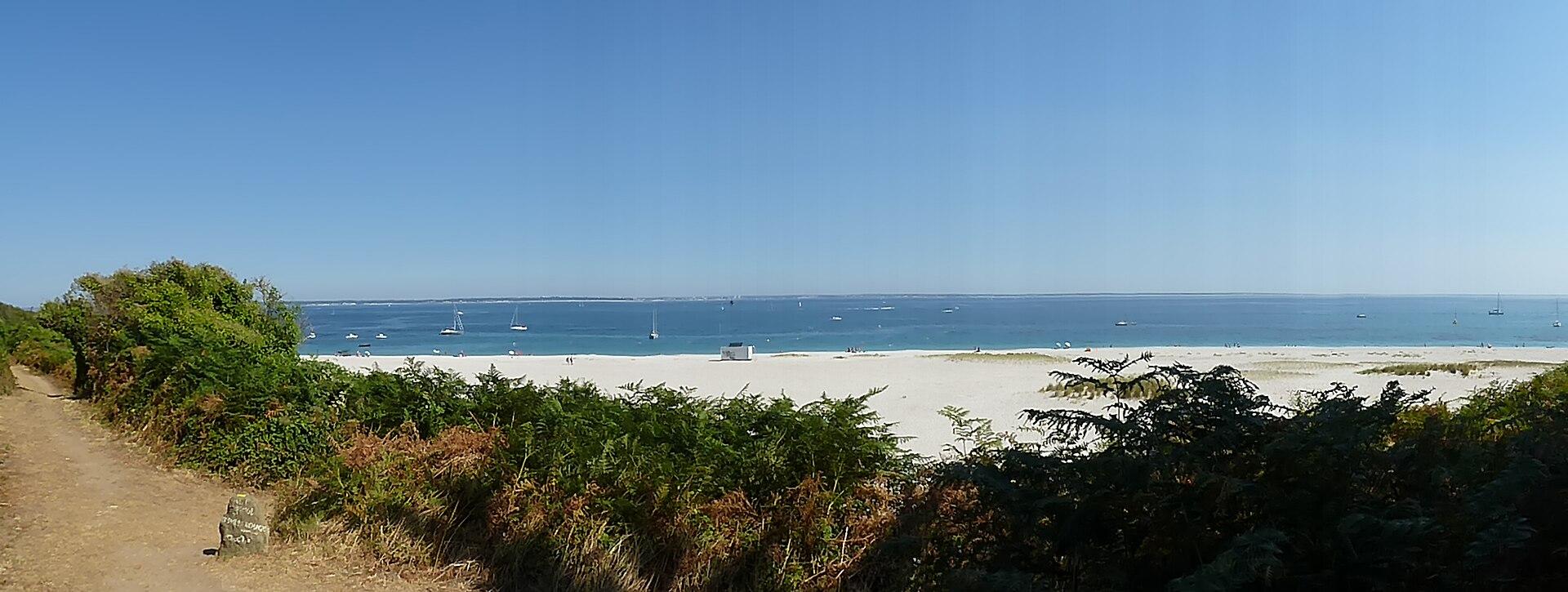 BeachPlage des Grands SablesÎle de Groix · 3 hours to a full dayOn Groix, Les Grands Sables is an exceptional convex beach of fine white sand, lifeguarded in summer, known for moving with the currents and storms.
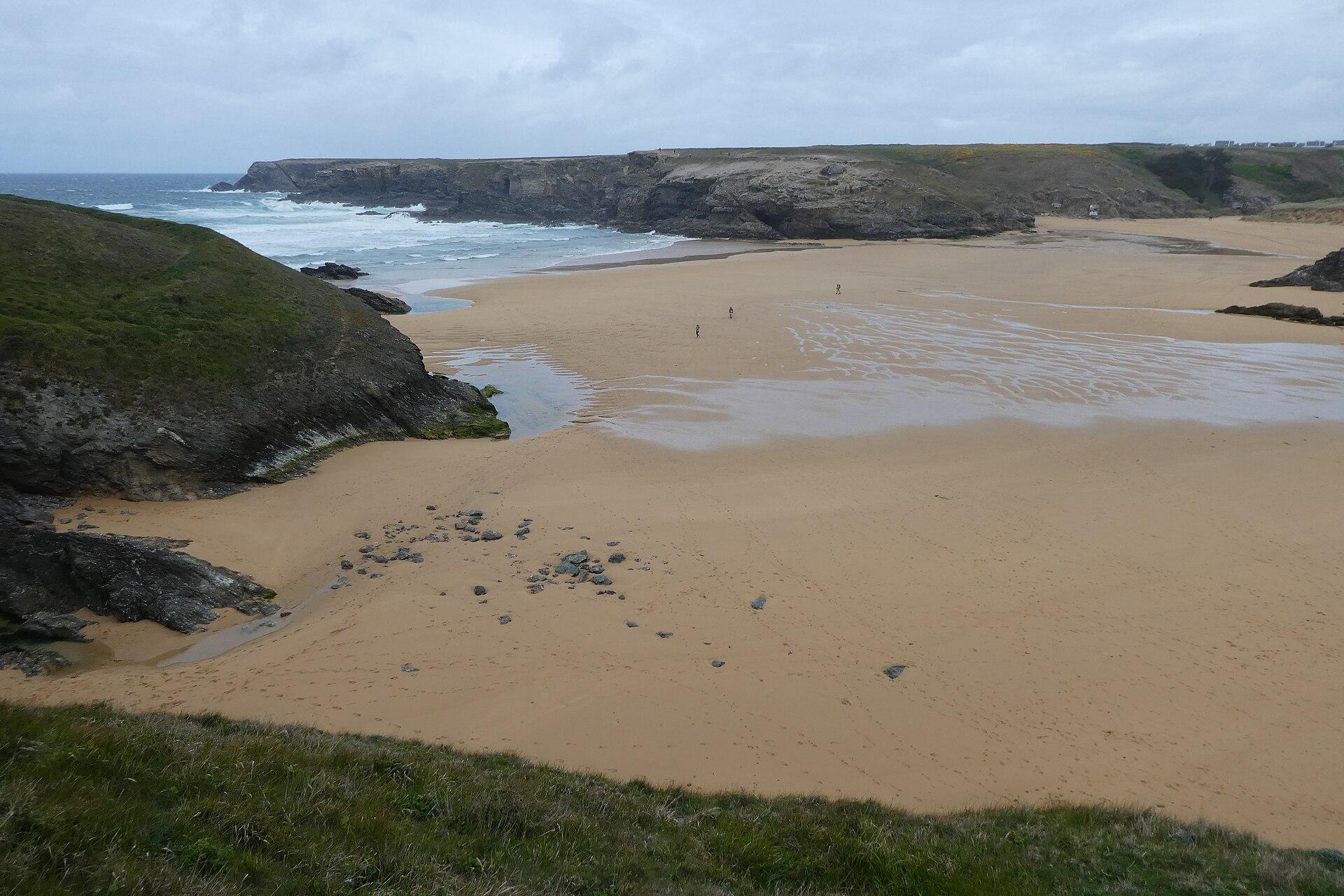 BeachDonnant BeachBelle-Île-en-Mer · 3 to 5 hours, a full day with a hikeIn Bangor, Donnant is a cove more than 350 m long facing due west, overlooked by huge dunes, known for its rollers, its surf schools and lifeguarded swimming in July and August.
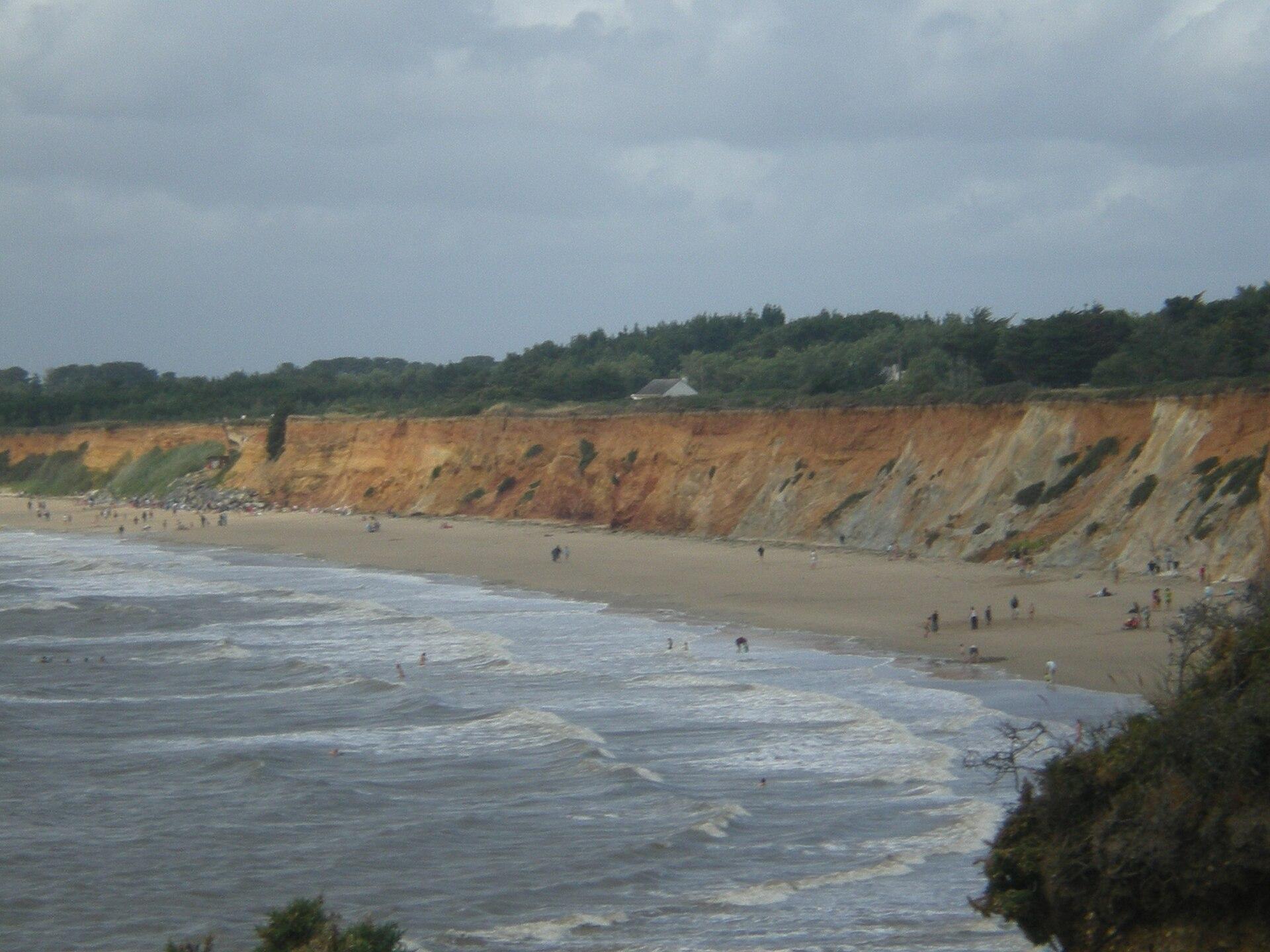 BeachPlage de la Mine d’OrPénestin · 3 hours to a full dayIn Pénestin, the Mine d’Or is a long beach of about 2 km overlooked by listed ochre cliffs, known for its unique landscape, paragliding, walking and swimming.
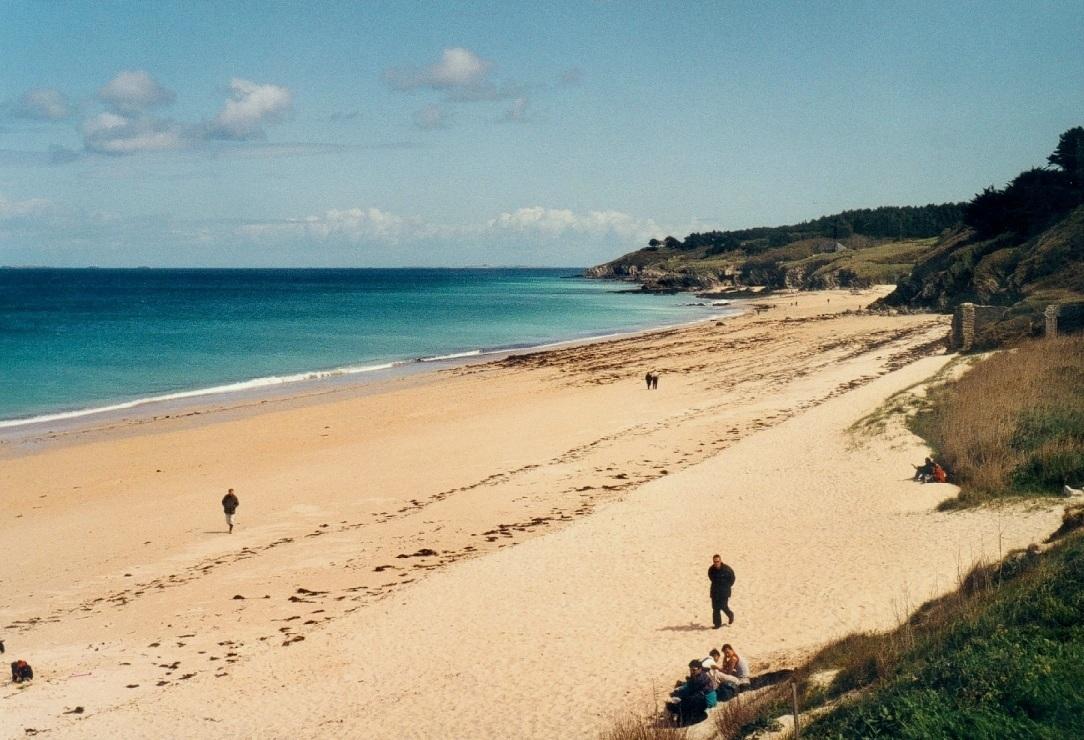 BeachPlage des Grands Sables, secteur LocmariaLocmaria · 2 h 30 to half a dayThe Locmaria side of Les Grands Sables, on the east coast of Groix, reached by a path, with white sand, clear water and the Sables Rouges close by.
- BeachPlage de SuscinioSarzeau · 3 hours to a full dayIn Sarzeau, Suscinio lies in a bay several kilometres long lined with dunes, right next to the castle of the Dukes of Brittany, with excellent water quality and no lifeguards.
- BeachPlage de KerhillioErdeven · 3 hours to a full dayIn Erdeven, Kerhillio is the town’s best-known beach: a vast ribbon of fine sand, lifeguarded in summer, with wheelchair access, and surfing, kitesurfing, windsurfing and sand yachting in designated zones.
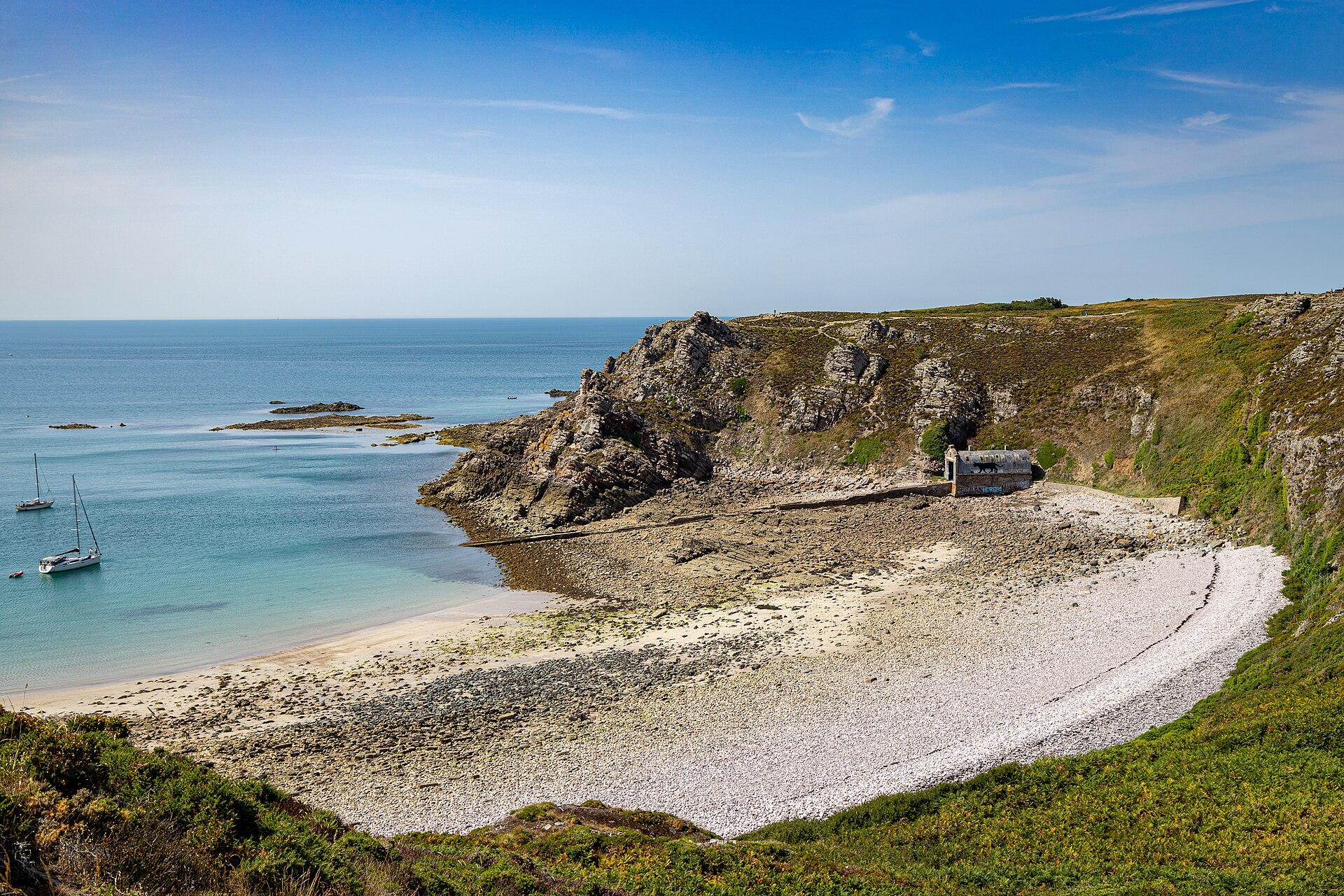 BeachPlage de Port-BlancSaint-Pierre-Quiberon · 1 h 30 to half a dayOn the Côte Sauvage of Saint-Pierre-Quiberon, Port-Blanc is a spectacular site of dunes, cliffs and swell next to a natural arch, to admire from the GR34: swimming is strictly forbidden.
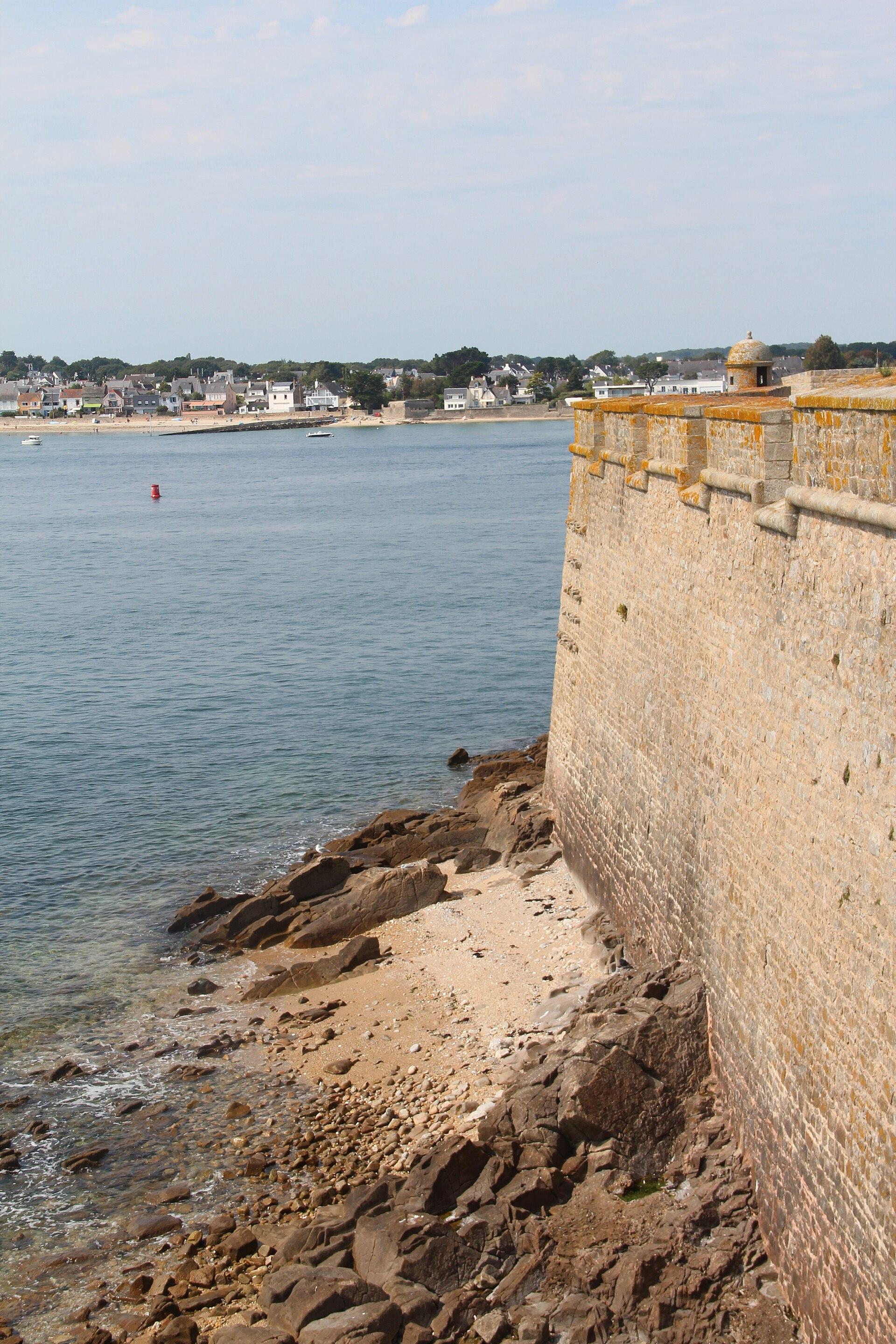 BeachGrande Plage de Port-Louis, Les PâtisPort-Louis · 3 hours to a full day with a visit to the citadelIn Port-Louis, the Grande Plage des Pâtis nestles below the ramparts of the citadel, with sand, beach huts, terraces, a view of the Lorient roadstead and wheelchair facilities.
Belle-Île
The largest of the Breton islands, forty five minutes from Quiberon: eighty five square kilometres, four municipalities, and enough to fill a week. Monet came in the autumn of 1886 for a week or two; he stayed seventy five days and brought back thirty nine canvases, all of the wild coast. The Port-Coton needles he painted are still in the same place.
Where to stay
Campsites in Morbihan
- CampsiteFlower Camping Le Bois d’AmourQuiberon · 1 night or moreIn Quiberon, Le Bois d’Amour is 150 m from Goviro beach, with a 25 m pool that can be covered or open, and water slides.See prices and bookPartner link Booking.com
- CampsiteCamping de la BaieLa Trinité-sur-Mer · 1 night or moreIn La Trinité-sur-Mer, the Camping de la Baie is 50 m from Kervillen beach, with a heated pool and a bar-restaurant with a sea view.
- CampsiteCamping le DolmenCarnac · 1 night or moreIn Carnac, Le Dolmen is a 2.7-hectare wooded park 600 m from Men-Dû beach, with 134 pitches and an indoor pool.
- CampsiteCamping BordénéoLe Palais · 1 night or moreOn Belle-Île, Bordénéo is 500 m from Port-Fouquet beach and 2 km from Le Palais, with an indoor pool and the start of the GR340.
- CampsiteFlower Camping Le KerarnoSaint-Philibert · 1 night or moreIn Saint-Philibert, between La Trinité and Carnac, Le Kerarno covers more than 5 hectares, 500 m from the village, with a heated pool.
- CampsiteCamping le Fort EspagnolCrach · 1 night or moreIn Crac’h, near La Trinité, Le Fort Espagnol covers 5 hectares, with heated indoor and outdoor pools, slides and a hot tub.
- CampsiteCamping les 7 SaintsErdeven · 1 night or moreIn Erdeven, between dunes and megaliths, Les 7 Saints is a 5-star campsite open all year, with a heated pool, a hammam and a restaurant.
- CampsiteCamping de KergoPloemel · 1 night or moreIn Ploemel, Kergo covers 3 hectares of pine forest five minutes from the beaches, with a sauna, a hot tub, eco-lodges and Pod cabins.See prices and bookPartner link Booking.com
Prices and opening dates change from one season to the next: check with the establishment.
Going further
Morbihan, in the journal
- What to do in Morbihan during the Christmas holidays
- What to do in Vannes during the Christmas holidays
- What to do in Lorient during the Christmas holidays
- What to do in Morbihan during the All Saints’ holidays
- What to do in Vannes during the All Saints’ holidays
- What to do in Lorient during the All Saints’ holidays
- What to do in Vannes: the complete guide
- What to do in Carnac: the complete guide