Museum
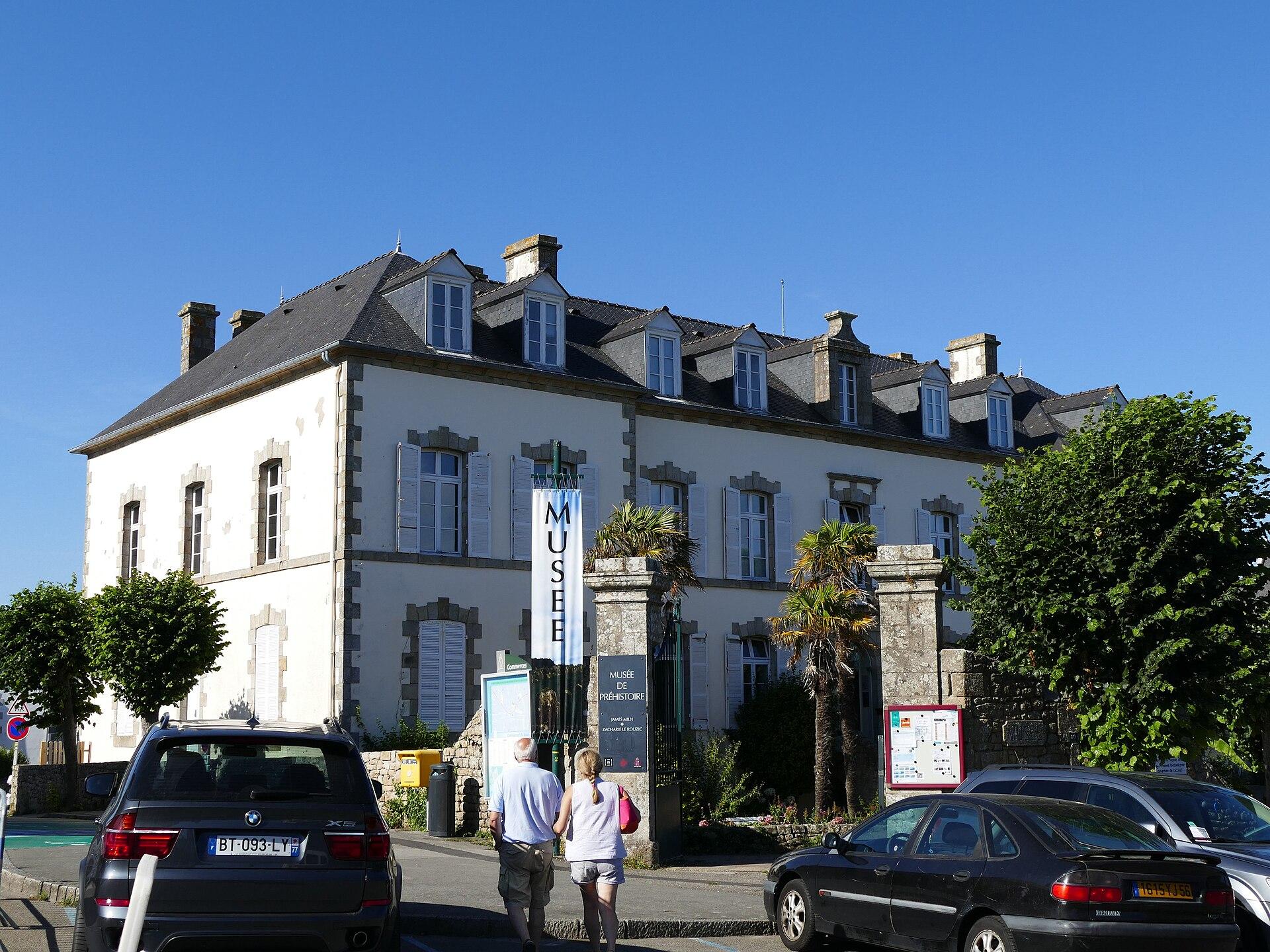
Museum of Prehistory, Carnac
Carnac · Morbihan
In Carnac, a world-class archaeological collection for understanding 450,000 years of history, above all the Neolithic: polished axes, jewellery, pottery, tools and objects found around the megaliths.
- Suggested time
- 1 h 30 to 2 hours
- Type of place
- Museum of prehistory and archaeology, a reference for megaliths
- Atmosphere
- Archaeological and educational, very rich in original objects and keys to understanding the megaliths
- Getting there
- Place Christian Bonnet, 56340 Carnac, in the village centre. The museum is the ideal complement to the stone rows, the Saint-Michel burial mound and the other megalithic sites of Carnac.
Who this place suits
- With family
- 9/10
- As a couple
- 9/10
- With friends
- 8/10
- Solo
- 10/10
- With a dog
- 1/10
- Reduced mobility
- 7/10
These scores are calculated from what the page records: official rating, facilities, difficulty, duration and location. They are a guide, not a substitute for contacting the venue, especially about accessibility.
About
The Museum of Prehistory in Carnac is the visit that gives meaning to the stone rows and the great megalithic monuments of the Morbihan. Its collections cover about 450,000 years of human history, from the Palaeolithic to the Gallo-Roman period, with an exceptional focus on the Neolithic and megalith building. About 3,000 objects are on display. Stone tools, polished axes, pottery, jewellery, weapons and grave goods come from Carnac and many sites across the Morbihan. Maps, plans and models place these pieces back in the dolmens, burial mounds, stone rows and settlements where they were found. The museum is particularly famous for its large axes in Alpine rock and its jewellery in precious or distant materials. Some raw materials travelled several hundred kilometres, from the Alps or the Iberian peninsula. They show that the societies that raised the megaliths were not isolated but part of vast trade networks. The route spreads over two levels and follows both a chronological and a thematic logic. It explains stone knapping and polishing, farming, burial practices, trade, the building of the monuments and how societies changed over several millennia. The museum is often presented as a world reference for megaliths. It is therefore well worth visiting before the Carnac stones or the Saint-Michel burial mound: the stones in the landscape become much easier to understand once you have seen the objects, plans and archaeological reconstructions. In 2026, full price is €7, and €3 for ages 6 to 17 and students. The museum follows a seasonal calendar and closes for part of the winter, so check the opening hours before your visit.
What you will see
- One of the largest European collections devoted to prehistory.
- An international reference for megaliths.
- About 3,000 objects on display.
- A story covering about 450,000 years of human history.
- Polished axes in Alpine rock that reveal very long-distance trade.
- Jewellery and grave goods found in the great Neolithic monuments.
Show 4 more pointsHide
- Pottery, tools and weapons that bring daily life to life.
- Plans and models that help you read the dolmens, burial mounds and stone rows.
- A route that explains the societies that built the Carnac megaliths.
- An ideal stop before or after the Carnac stones.
Practical information
- Address
- Place Christian Bonnet, 56340 Carnac
- Pets
- Ask the museum about its pet policy.
- Accessibility
- Check the areas and facilities available at the time of your visit.
Tips on the spot
- Visit the museum before the stone rows if it is your first time in Carnac: you will understand the monuments much better.
- 2026 prices: €7 full price, €3 for ages 6 to 17 and students; other reductions exist with proof.
- Check the day’s opening hours: the museum follows a seasonal calendar and closes for part of the winter.
- Allow at least 1 h 30; archaeology lovers can easily stay 2 hours.
- Start with the maps and the timeline before focusing on the most spectacular objects.
Show 3 more tipsHide
- The jade and other Alpine rock axes are essential: they prove that very long-distance trade networks existed.
- With children, use the models and everyday objects as a guide rather than reading every label.
- Combine the visit with the nearby Saint-Michel burial mound, then the stone rows.
Frequently asked questions
Why visit the Museum of Prehistory in Carnac?
It helps you understand the societies that built the megaliths and see the objects found during excavations.
How many objects are on display?
About 3,000.
What period does the museum cover?
About 450,000 years of history, from the Palaeolithic to the Gallo-Roman period, with a strong focus on the Neolithic.
Is the museum only about menhirs?
No. It covers prehistoric societies as a whole: settlements, tools, farming, trade, burial practices and monuments.
What are the large polished axes on display?
Some are made of Alpine rock carried over very long distances, a sign of major trade networks in the Neolithic.
How much does entry cost?
In 2026, full price is €7, and €3 for ages 6 to 17 and students, with other reductions with proof.
See also all the museums in Morbihan.
Stay in Carnac
Places to stay that are still available, with current prices, compared across the main booking platforms.
Partner link: a booking made from this map may earn us a commission, at no extra cost to you.
Read in the journal
- City guideWhat to do in Carnac: the complete guideThe UNESCO listed menhir alignments, the prehistory museum, the beaches, La Trinité-sur-Mer, Locmariaquer and Quiberon: what to do in Carnac and the surrounding area.
- ChristmasWhat to do in Morbihan during the Christmas holidaysChristmas in Vannes, the Pont-Scorff light trail, Rochefort-en-Terre lit up and Carnac in winter: our ideas for the 2026 Christmas holidays in Morbihan.
- SeasonWhat to do in Morbihan during the All Saints’ holidaysThe Carnac alignments open to walk among, the Gulf of Morbihan, castles, the wild coast and Lorient: our ideas for All Saints’ 2026 in Morbihan.
Traveller reviews
Nobody has reviewed this place yet.
Photograph: Peter Potrowl · CC BY-SA 4.0 · Wikimedia Commons