
Lighthouse
Héaux de Bréhat Lighthouse
Pleubian / large de Bréhat · Côtes-d’Armor
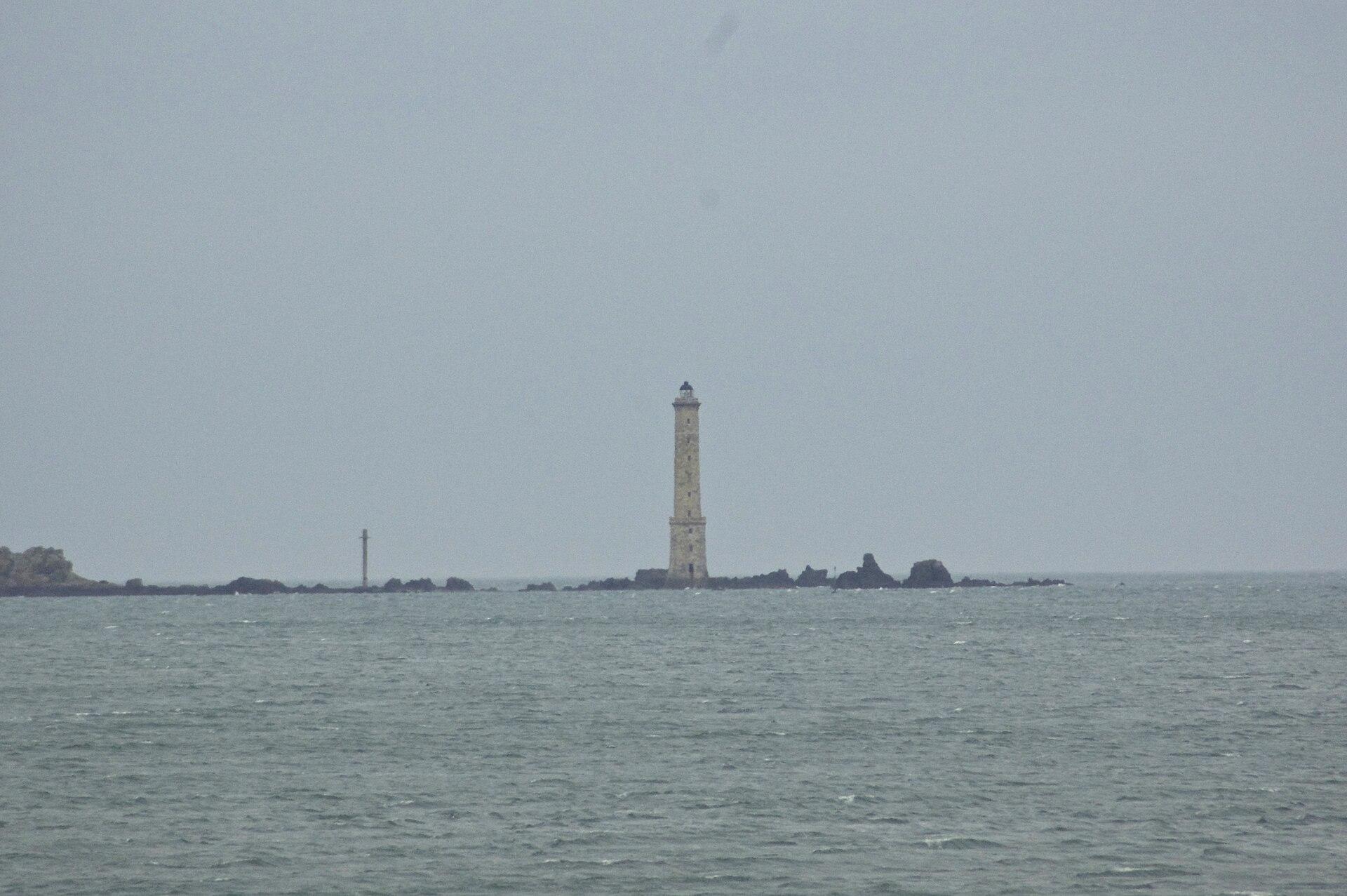
A 56.60 m tower on the Épées de Tréguier reefs, built from 1837, partly blown up in 1944 and then raised higher after the war.
- Suggested time
- 30 minutes to 1 hour of watching, longer as part of an outing
- Type of place
- Great lighthouse at sea, listed as a historic monument
- Atmosphere
- Monumental, historic, isolated and oceanic
- Getting there
- A lighthouse at sea north of Bréhat. Seen from the Trégor coast, the Sillon de Talbert and some boat trips around Bréhat.
Who this place suits
- With family
- 7/10
- As a couple
- 8/10
- With friends
- 8/10
- Solo
- 9/10
- With a dog
- 6/10
- Reduced mobility
- 3/10
These scores are calculated from what the page records: official rating, facilities, difficulty, duration and location. They are a guide, not a substitute for contacting the venue, especially about accessibility.
About
The Héaux de Bréhat lighthouse belongs to the first generation of great towers built directly at sea. Set on the Épées de Tréguier reefs, near the tip of the Sillon de Talbert, it marks the west of the bay of Saint-Brieuc and the entrance to the Trieux channel towards Bréhat. A first temporary light was lit in 1832 on a wooden scaffold, which storms quickly weakened. Construction of a stone tower began in 1837 and was completed in 1840. The original tower, 47.70 metres tall, was first lit on 1 February 1840. In August 1944, German troops blew up the top. The rebuilding from 1947 to 1949 came with a major raising: the tower is now about 56.60 metres tall. The current light shows four grouped flashes every 15 seconds, with white, red and green sectors. Electrified in 1979, the lighthouse is automated, and the last keepers left on 9 July 1982. Listed as a historic monument since 2011, it cannot be visited. Watching it from the coast or from a boat nevertheless shows what a feat its construction was and how exposed the site is.
What you will see
- Status: not open to visitors.
- Height: 56.60 m.
- Light: four grouped flashes every 15 seconds.
- Range: 15 miles in the white sectors, 11.5 miles in the red and green sectors.
- Optics: horizon light, 0.50 m focal length; 180 W lamp.
- Electrified in 1979, automated in 1982.
Show 1 more pointHide
- History: April 1831, decision to install a temporary light; 1 December 1832, light lit on a wooden scaffold; 1837 to 1840, the great stone tower is built; 1 February 1840, the tower’s first light; 1903, a white light flashing every four seconds; 1930, a horizon sector light; August 1944, the top blown up; 1947 to 1949, rebuilt and raised; 1979, electrification; 9 July 1982, the last keepers leave; 23 May 2011, listed as a historic monument.
Practical information
- Getting there
- A lighthouse at sea north of Bréhat. Seen from the Trégor coast, the Sillon de Talbert and some boat trips around Bréhat
- Pets
- Rules can be strict in the protected natural areas, especially around the Sillon de Talbert
- Accessibility
- No access to the lighthouse. Accessibility depends on the viewpoint on land or the boat used
- With family
- Interesting alongside a visit to Bréhat or the Sillon de Talbert, especially if you tell the story of its construction
- Safety
- The coastal viewpoints can be very exposed. On the Sillon de Talbert, follow local instructions, watch the tides and protect the environment
- Best time
- Clear weather, calm sea and good visibility
- Photography
- From the coast, a telephoto lens is strongly recommended. Views with the Sillon de Talbert, the reefs or boats give the tower a better sense of scale
- Nearby
- The Sillon de Talbert, the Île de Bréhat, the Trieux estuary, Lézardrieux, Paimpol
Tips on the spot
- Check the visit status on the day before you travel, and do not confuse access to the site, the foot of the lighthouse and the inside of the tower.
- For a lighthouse open to visitors, check the time of the last climb, not just the closing time.
- For a lighthouse at sea, only watch it from a boat run by a professional or from a safe viewpoint on land.
- Bring a windproof layer, even in summer; stairs and galleries can be slippery with rain or spray.
- With children, check the number of steps and any minimum age; with vertigo, the climb to the gallery is not for everyone.
Show 7 more tipsHide
- Working lighthouses are maritime safety equipment: respect all restricted technical areas.
- For photos, use a wide angle at the foot of the lighthouse and a telephoto lens for lighthouses seen from a distance.
- On an island, check the last boat back before starting the visit.
- On cliffs, stay behind the barriers and on the paths; keep dogs on a lead in nature reserves.
- Visits can be cancelled at the last minute for safety reasons.
- On the foreshore, check the tide times and leave a good margin for the way back.
- Combine the lighthouse with the Sillon de Talbert or a trip to Bréhat.
Frequently asked questions
Can I visit the Héaux de Bréhat lighthouse?
No. It is a lighthouse at sea north of Bréhat, seen from the Trégor coast, the Sillon de Talbert and some boat trips around Bréhat.
How much time should I allow?
30 minutes to 1 hour of watching, longer as part of an outing.
What makes it special?
It is one of the great milestones in the French history of lighthouses at sea, at the entrance to the Trieux channel.
What is the atmosphere like?
Monumental, historic, isolated and oceanic.
When is the best time for photos?
From the coast, with a telephoto lens; views with the Sillon de Talbert, the reefs or boats give the tower a better sense of scale.
Is there any particular risk?
The coastal viewpoints can be very exposed. On the Sillon de Talbert, follow local instructions, watch the tides and protect the environment.
Stay in Pleubian / large de Bréhat
Places to stay that are still available, with current prices, compared across the main booking platforms.
Partner link: a booking made from this map may earn us a commission, at no extra cost to you.
Read in the journal
- ChristmasWhat to do in Côtes-d’Armor during the Christmas holidaysDinan in winter, scallops, the birds of the bay and Cap Fréhel in the wind: our ideas for the 2026 Christmas holidays in Côtes-d’Armor.
- SeasonWhat to do in Côtes-d’Armor at All Saints’Pink granite, Cap Fréhel, Bréhat, the scallop season and castles: our ideas for the 2026 All Saints’ holidays in Côtes-d’Armor.
- RankingThe most beautiful beaches in Côtes-d’ArmorSaint-Guirec and Trestraou in Perros-Guirec, Coz-Pors, the Plage Bonaparte, Val-André and Cap d’Erquy: our selection of the most beautiful beaches in Côtes-d’Armor.
Traveller reviews
Nobody has reviewed this place yet.
Photograph: Colsu · CC BY-SA 4.0 · Wikimedia Commons