
Heritage site
Carnac Stones
Carnac · Morbihan
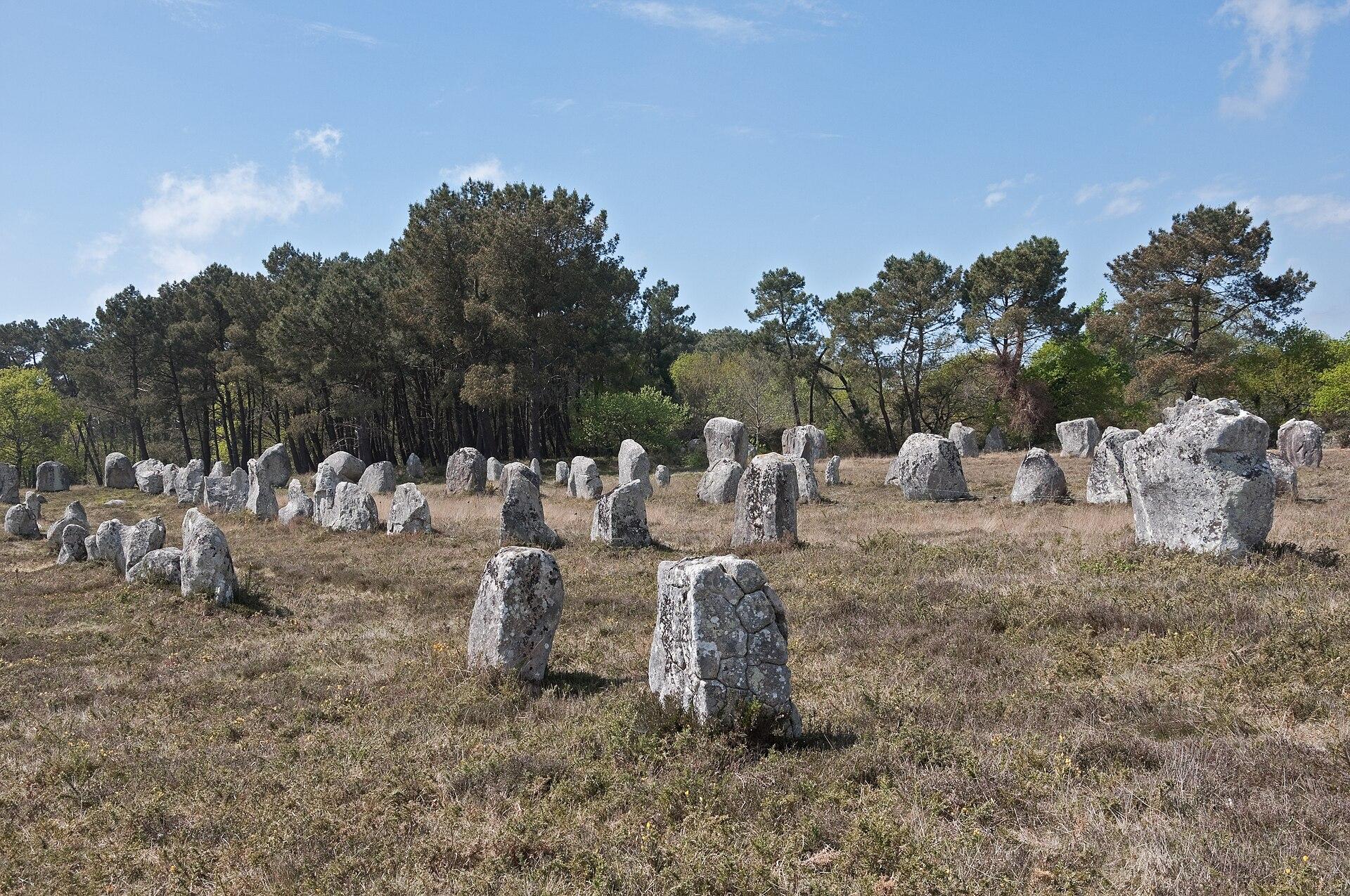
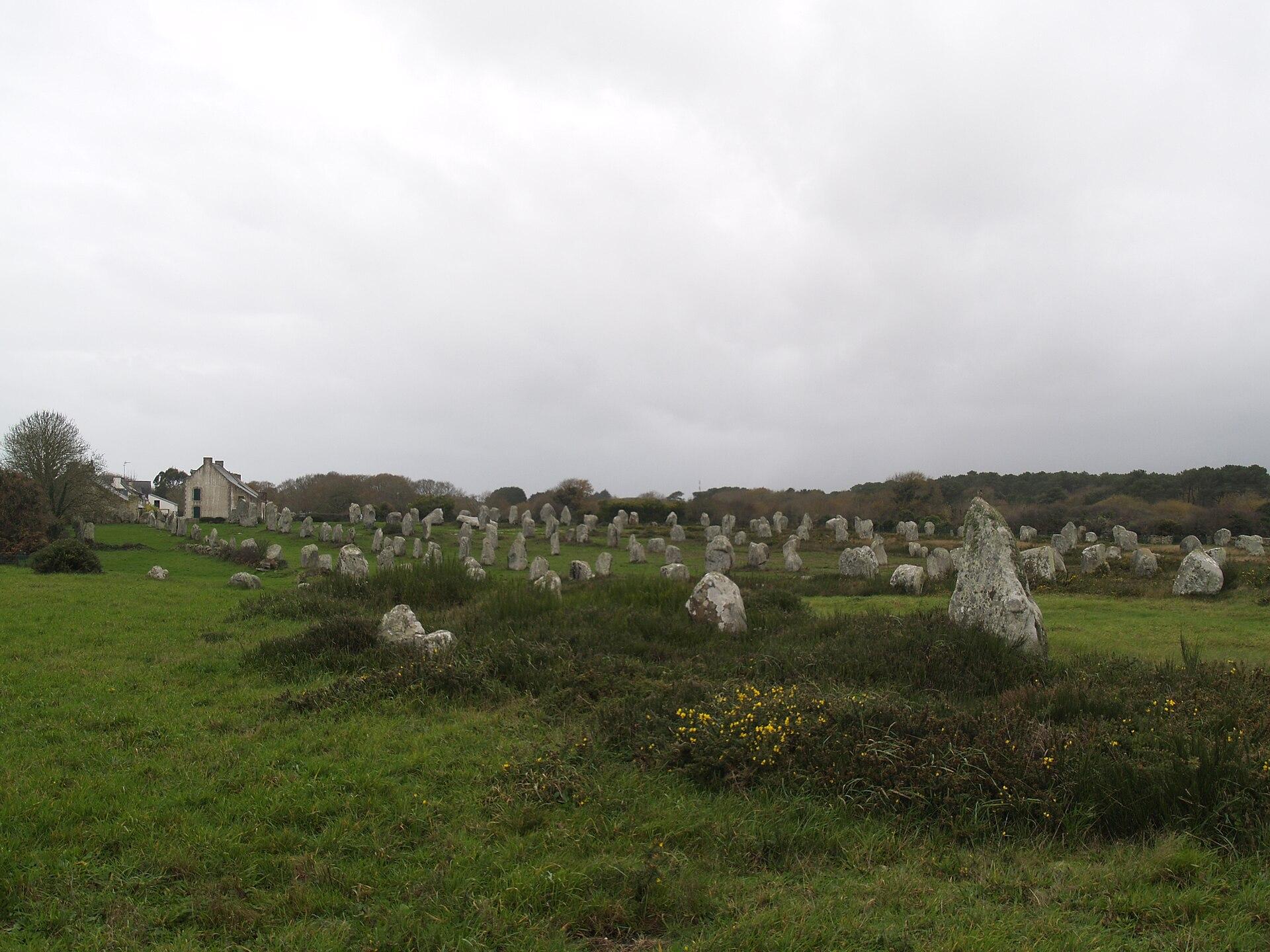
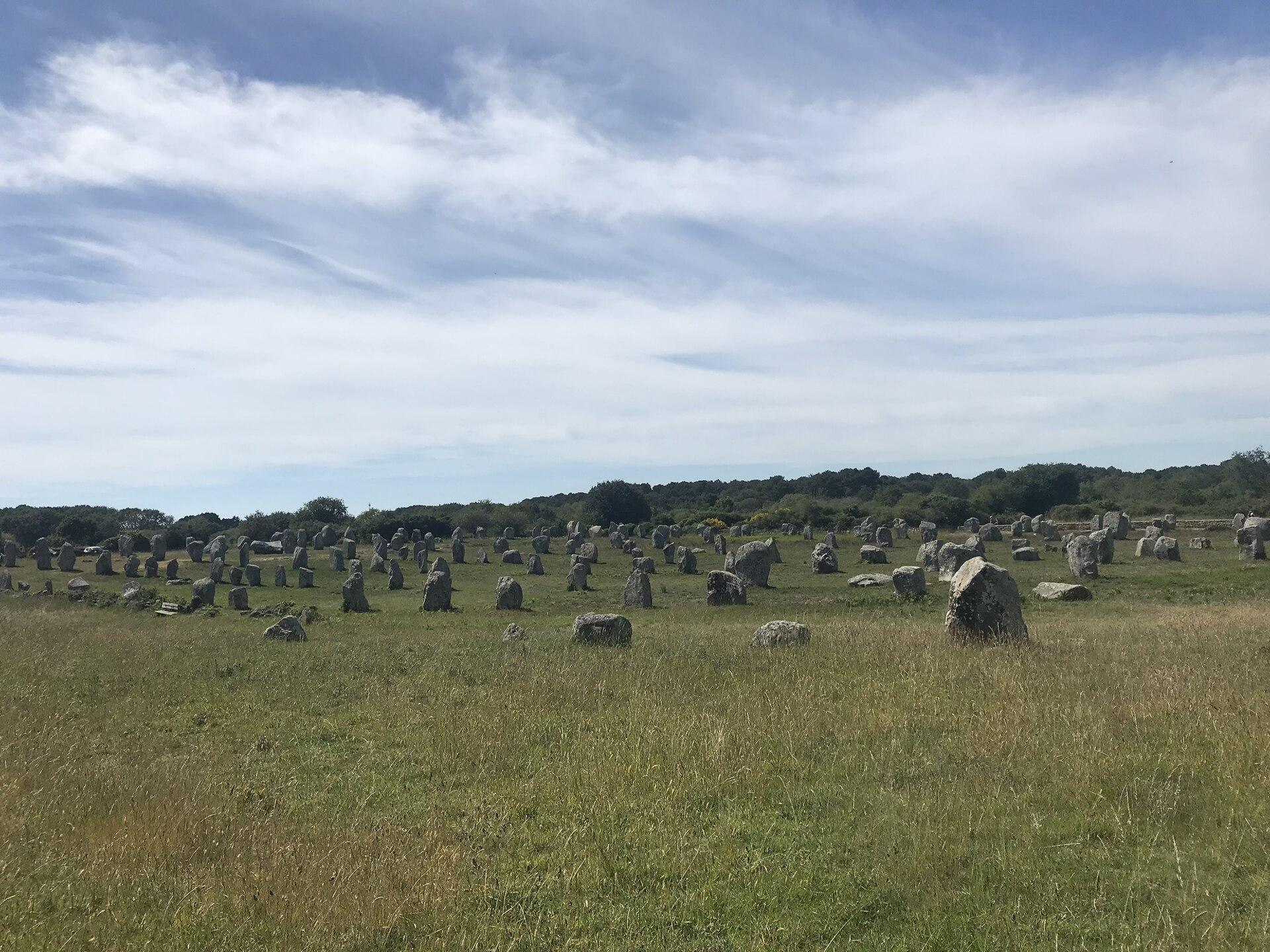
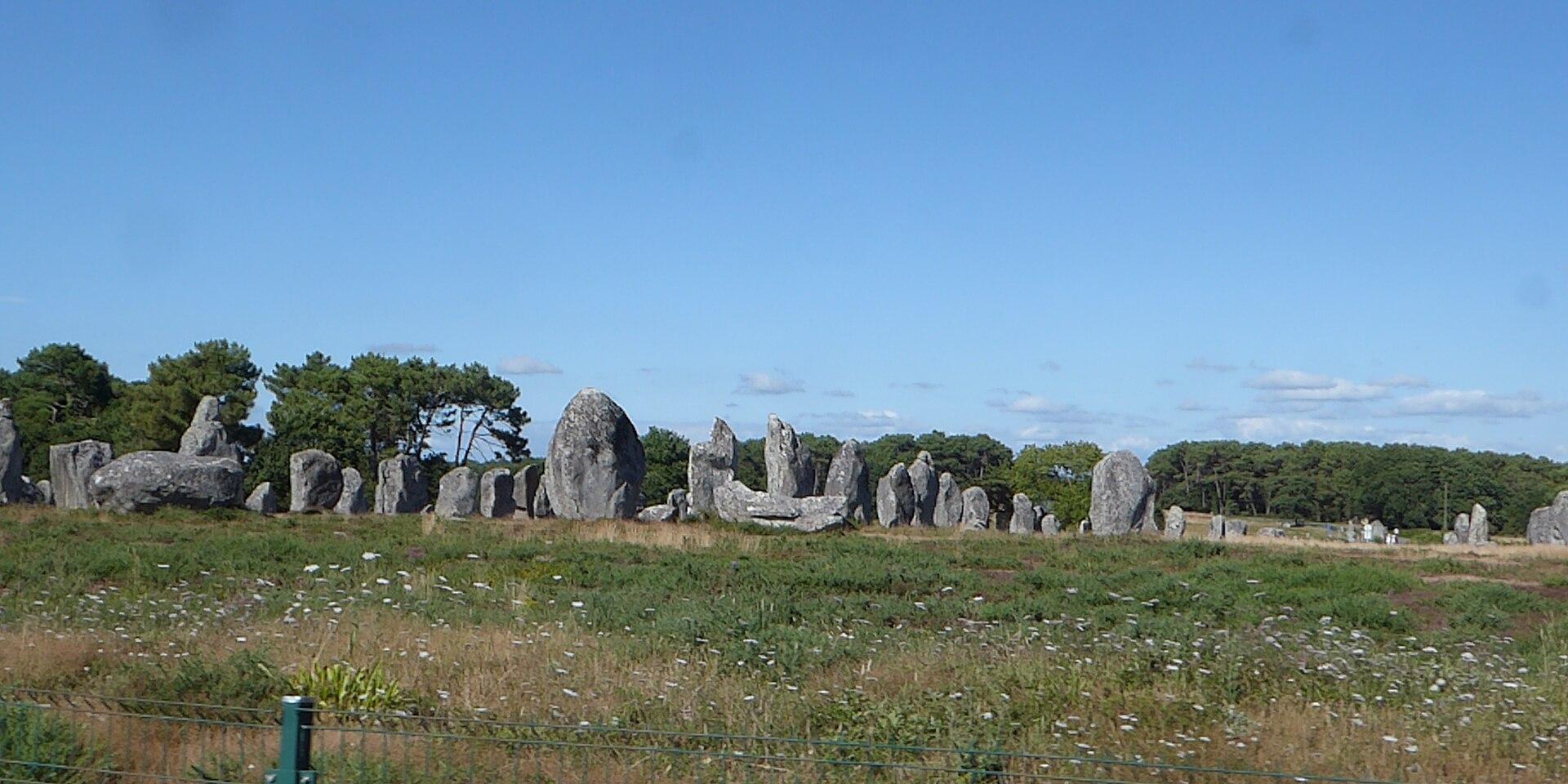
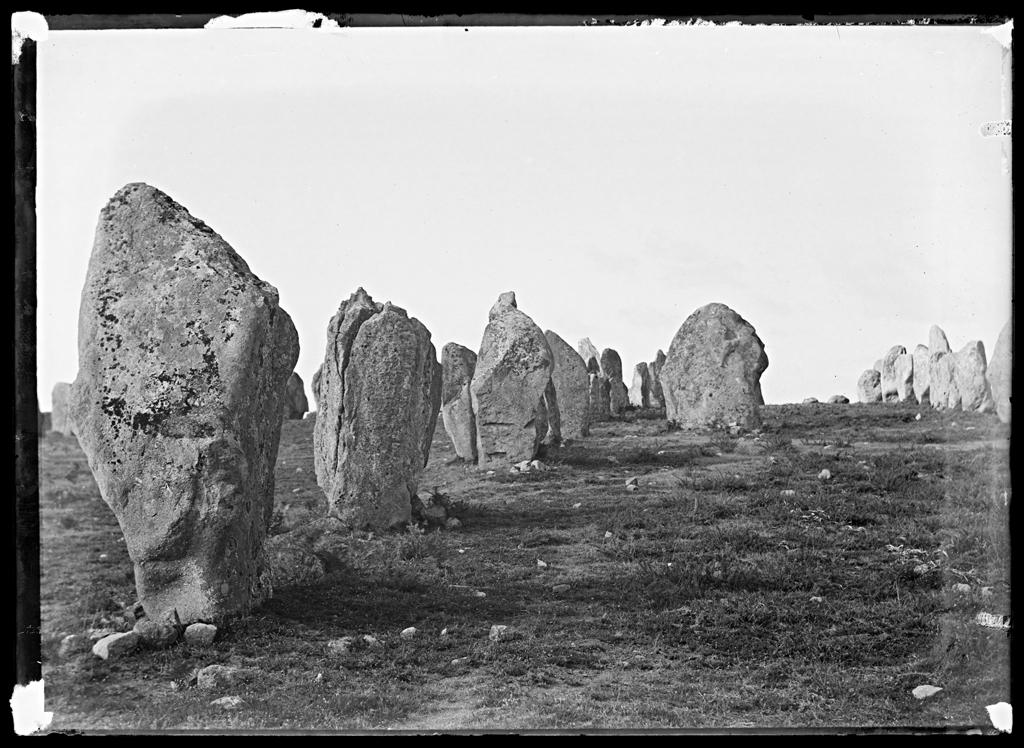
Nearly 3,000 standing stones over four kilometres, raised more than six thousand years ago, at Le Ménec, Kermario, Le Manio and Kerlescan. Inscribed as a UNESCO World Heritage Site on 12 July 2025.
- Suggested time
- 1 h 30 to half a day
- Type of place
- Megalithic stone rows, World Heritage Site
- Atmosphere
- Ancient, silent, open to the sky, in the heathland and the wind
- Getting there
- Maison des mégalithes, Le Ménec, 56340 Carnac. From Auray, D768 then D119. The Maison des mégalithes car park is for ticket holders only; otherwise, use the municipal Alignements car park 900 metres north, via allée des Alouettes, campervans allowed. Auray station is fifteen kilometres away, then BreizhGo bus. In July and August, a local shuttle serves the stones for one euro per trip.
Who this place suits
- With family
- 9/10
- As a couple
- 9/10
- With friends
- 9/10
- Solo
- 10/10
- With a dog
- 8/10
- Reduced mobility
- 6/10
These scores are calculated from what the page records: official rating, facilities, difficulty, duration and location. They are a guide, not a substitute for contacting the venue, especially about accessibility.
About
Le Ménec, Kermario, Le Manio, Kerlescan: nearly 3,000 standing stones (menhirs) raised over four kilometres, in the heathland and meadows of southern Morbihan. It is the largest group of stone rows in the world, and you do not visit it like a monument: you walk through it. At Le Ménec, one thousand and fifty stones in eleven rows, and a village that grew up inside the old enclosure of seventy-one blocks. At Kermario, one thousand and twenty-nine menhirs, the first of them more than three metres tall. At Le Manio, the Giant stands guard at six and a half metres, the tallest at Carnac. At Kerlescan, the smallest of the three fields but the best preserved, the rows fan out in front of an almost square enclosure. Recent excavations date these stones to between 4800 and 3500 BC. They are older than the pyramids and Stonehenge, raised by Neolithic societies that did not know metal: farmers and herders who shaped stone, fired pottery and sailed, and who still moved blocks weighing dozens of tonnes. No one knows how long the work lasted, a few years or several centuries. What were the stone rows for? A sanctuary, a territorial marker, a tribute to the dead, a celestial calendar: there has never been a shortage of theories, none has been proven, and UNESCO itself says that we do not know. What archaeology does establish is that nothing here happened by chance. The rows follow the relief and the watercourses, the sizes of the stones answer one another, and the rows run over older burial mounds that they incorporate. One certainty about what they are not: the druids had nothing to do with them; they belong to Celtic societies, several thousand years later. The stones have been listed as historic monuments since 1889, and the French State bought most of the land to protect it from quarries and building. The fences put up between 1991 and 1993 are not there to make you pay: they let the archaeological ground and the heathland recover after decades of free trampling. Around a hundred Landes de Bretagne sheep now graze nearly seventy hectares of heath, meadow and pine woods, where a 2019 survey recorded one hundred and sixty-seven plant species and seventy-two bird species. UNESCO has inscribed the whole site on the World Heritage List, the first site located entirely in Brittany. The visit takes a little effort. From April to September, you can only go in among the stones with a guide; from October to March, some fields reopen for free access, depending on the state of the ground and whether the flocks are there. But the outer path runs along the four kilometres all year round, free of charge, as does the Maison des mégalithes and its exhibition. So you can see everything without paying anything, and it is at daybreak, when the mist still lingers between the rows, that the silence of six thousand years is best heard.
What you will see
- The largest group of stone rows in the world: nearly 3,000 menhirs over four kilometres, from Le Ménec to Kerlescan. The Centre des monuments nationaux counts about 2,800 still visible, the difference coming from fallen or vanished stones.
- Stones raised between 4800 and 3500 BC, older than the pyramids and Stonehenge, by societies that did not know metal.
- Le Ménec: 1,050 menhirs in eleven rows over 1,165 metres, and an enclosure of seventy-one blocks inside which a village grew up over the centuries.
- Kermario: 1,029 menhirs in ten rows over 1,200 metres, the most imposing blocks on the site, and a dolmen at the western end.
- The Giant of Le Manio, six and a half metres, the tallest standing menhir at Carnac, and the nearby Quadrilateral, which surrounded a burial mound that has since disappeared.
- Kerlescan: 555 menhirs in thirteen fan-shaped rows, the best preserved of the three fields, with its enclosure of thirty-nine stones and its ninety-eight metre mound.
Show 4 more pointsHide
- Inscribed as a UNESCO World Heritage Site on 12 July 2025, the first site located entirely in Brittany, within a 19,598 hectare area spread over twenty-seven municipalities.
- Listed as a historic monument since 1889, and maintained by eco-grazing with around a hundred Landes de Bretagne sheep over nearly seventy hectares.
- Unexpected biodiversity: 167 plant species, 72 bird species including 58 protected ones, 33 butterflies, and reptiles and amphibians that are all protected.
- Outer paths and the Maison des mégalithes are free all year round: you can see everything without paying.
Practical information
- Best time
- Morning for the cool air and parking, late afternoon for the low light across the rows of stones. Spring and autumn avoid the summer crowds.
Tips on the spot
- From April to September, you can only go in among the stones with a guide: this protects the archaeological ground from trampling. The outer paths stay free and open all year round.
- From October to March, some rows reopen for free access, but not all at the same time: it depends on the state of the ground and whether the sheep are there. Ask at the Maison des mégalithes what is open on the day.
- Start at the Maison des mégalithes, which is free: video, exhibition and site map. An hour’s guided tour teaches you more than three hours walking alone.
- Do not just stop for ten minutes at Kermario. The Giant of Le Manio and Kerlescan, further on, are what give the landscape its scale: allow half a day for the three fields.
- From Le Ménec to Kerlescan, 3.5 kilometres one way, about two hours. From Le Ménec to Kermario, 1.5 kilometres, three quarters of an hour. The accessible loop around Le Ménec is 700 metres.
Show 7 more tipsHide
- No, the druids did not build anything here: they belong to Celtic societies, several thousand years later. The confusion comes from 19th century scholars and dies hard.
- Do not climb on the stones or lean on them. A menhir is buried to only about a tenth of its height: in November 2021, one fell over on its own.
- Closed shoes and water: the ground is natural and uneven, and several areas have little shade. In summer, book the guided tour and come in the morning, for the cool air and for parking.
- The Maison des mégalithes car park is for ticket holders only. Otherwise, use the municipal Alignements car park 900 metres north, via allée des Alouettes.
- The Kermaux mill offers the only raised viewpoint over the rows: it is the best place to see how they are laid out.
- To really understand, add the Carnac Museum of Prehistory: its jade axes from the Alps show better than anything the reach of Neolithic networks.
- In the low season, mist and frost transform the site. Winter is the best season for photography, and the only one when you can sometimes walk alone among the stones.
Frequently asked questions
Can you see the menhirs for free?
Yes. An outer path runs along the four kilometres of stone rows all year round, and the Maison des mégalithes is free. Only the guided tour among the stones is paid.
Can you walk among the menhirs?
From April to September, only on a guided tour. From October to March, some fields reopen for free access, depending on the state of the ground and whether the sheep are there.
How much is the guided tour?
€13 for an adult, €6 for ages 7 to 17, free under 7. The Pass des mégalithes gives a reduced price from the second partner site visited.
How long is the guided tour?
About an hour. It takes place entirely outdoors, and may be changed or cancelled during a heatwave.
Do I need to book?
It is strongly advised in summer and during school holidays. The Maison des mégalithes car park is also for ticket holders only.
What are the opening hours of the Maison des mégalithes?
9.30 am to 6 pm from April to June and in September, 9.30 am to 7 pm in July and August, 10 am to 1 pm and 2 pm to 5 pm from October to March. Closed on 1 January, 1 May and 25 December.
See also all the heritage in Brittany.
Stay in Carnac
Places to stay that are still available, with current prices, compared across the main booking platforms.
Partner link: a booking made from this map may earn us a commission, at no extra cost to you.
Read in the journal
- City guideWhat to do in Carnac: the complete guideThe UNESCO listed menhir alignments, the prehistory museum, the beaches, La Trinité-sur-Mer, Locmariaquer and Quiberon: what to do in Carnac and the surrounding area.
- ChristmasWhat to do in Morbihan during the Christmas holidaysChristmas in Vannes, the Pont-Scorff light trail, Rochefort-en-Terre lit up and Carnac in winter: our ideas for the 2026 Christmas holidays in Morbihan.
- SeasonWhat to do in Morbihan during the All Saints’ holidaysThe Carnac alignments open to walk among, the Gulf of Morbihan, castles, the wild coast and Lorient: our ideas for All Saints’ 2026 in Morbihan.
Traveller reviews
Nobody has reviewed this place yet.
Photographs: Myrabella · CC BY-SA 3.0 · Wikimedia Commons · Vanbasten 23 · CC BY-SA 4.0 · Wikimedia Commons · Mouh2jijel · CC BY-SA 3.0 · Wikimedia Commons · Le Passant · CC BY-SA 4.0 · Wikimedia Commons · Philippe Tassier · Public domain · Wikimedia Commons